Big Brother’s Omar row highlights the question that can expose coercive control
As viewers raise concerns about Omar and Rhianna, Women’s Aid says a simple question can help identify controlling behaviour: does it feel right?
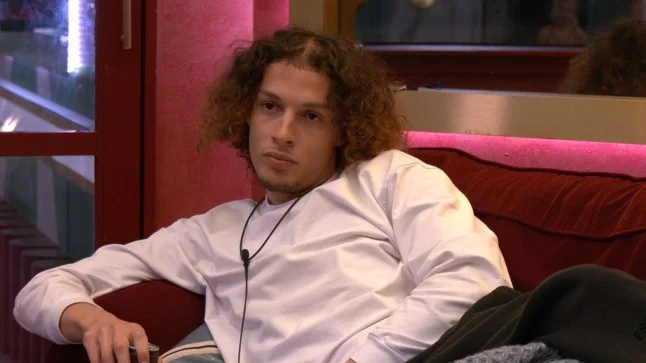
The most revealing question in the concerns surrounding Big Brother housemates Omar and Rhianna may be the simplest one: does the relationship feel right? Women’s Aid says that question can help people recognise coercive control, which can be difficult to identify while someone is living through it.

Viewers have called for 21-year-old Omar to leave the house after accusations of coercive control and more than 7,000 complaints to Ofcom. His behaviour towards fellow housemate Rhianna has been described as “scary” by some viewers, with others alleging “toxic abuse”. Those claims concern his conduct on the programme; Women’s Aid’s warning is about the wider risk of presenting such behaviour as entertainment.
Veronica Oakeshott, the charity’s head of external affairs, said coercive control can create “invisible chains” and fear that affects every part of a survivor’s life. She called it worrying to see behaviour of this kind given a platform on a popular show.
The scenes have also prompted concern about how Rhianna is feeling. She has said she feels as though she is “constantly doing something wrong” and is “going crazy” amid Omar’s mood swings. Those comments are not, by themselves, a diagnosis of what is happening between them. But they help explain why viewers and the charity are drawing attention to the effects of controlling behaviour.
Why the question matters
People may assume they would immediately recognise abuse in their own relationship. Women’s Aid cautions that it can be far less clear from inside the relationship: someone experiencing coercive control may be left in “a world of confusion, contradiction and fear”, and may not yet understand the severity of what is happening.
The charity’s advice is to ask yourself: “Does this feel right?” A spokesperson told Metro that disagreements are normal, but frequent conflict that forms a pattern may signal that something is wrong and could be abusive. The word itself can be hard to consider or say aloud; the question offers a starting point focused on your own experience.
That starting point matters because controlling behaviour can be subtle, hidden or overlooked. The source cites the Enough initiative’s message that recognising abuse is the first step towards stopping it. A person may excuse hurtful conduct with phrases such as “I didn’t mean it”, “I was having a bad day” or “It only happened once”. Hearing those explanations can lead someone to doubt whether their concerns are valid. Women’s Aid says they can be signs of an unhealthy or controlling relationship.
A healthy relationship, the charity says, should centre love, respect, support, freedom, happiness and consent. The question is not whether a couple ever disagrees; it is whether repeated behaviour is eroding those values or leaving one person fearful, restricted or unsure of their own judgement.
Patterns that can restrict everyday life
Women’s Aid lists a range of behaviours associated with coercive control. These include cutting someone off from friends and family; withholding basic needs such as food; tracking their time or monitoring them through online tools or spyware; and controlling where they go, whom they see, what they wear or when they sleep.
Other examples include blocking access to medical or other support services, repeatedly calling someone worthless, humiliating or dehumanising them, taking control of their finances, and using threats or intimidation. A single disagreement does not establish a pattern. The concern is the repeated use of actions that narrow another person’s choices and independence.

The issue has a history beyond television. Coercive control became a criminal offence in England and Wales in December 2015. The case of Sally Challen helped bring public attention to the way long-term control and humiliation can shape a relationship. Challen was convicted of murdering her husband, Richard, in 2011, before coercive control was an offence. She received a life sentence with a minimum term of 22 years, later reduced to 18.
In 2017, the organisation Justice for Women submitted grounds for appeal, using evidence of coercive control to challenge Challen’s conviction. Two years later, the conviction was overturned and a retrial ordered. Prosecutors ultimately accepted her plea of manslaughter; her sentence was changed to 14 years, and she was released because she had already served that time.
When abuse is understood only later
Kirsten*, now 36, says she spent four years with an ex-partner before recognising the relationship as abusive. At first, she said, he seemed like “the perfect guy”. Over time, he wore down her confidence, calling her “a psycho” or “stupid” almost every day. When she tried to explain how his behaviour affected her, he told her she was wrong and ended the discussion. He also said she needed therapy because something was wrong with her; she went.
She describes rules that were understated but restrictive: she could not sit beside him on the sofa, call him first or initiate sex. When plans involved his friends or family, she was expected to attend. He avoided her friends, and she lost contact with them because she was afraid to be away from him.
By the time the relationship ended, Kirsten could not imagine life without him and was distraught when he left. It was only years later, after she returned to therapy and discussed the relationship with a counsellor, that she understood it as abuse. Her account shows why coercive control can be hard to name in the moment: restrictions can accumulate until they feel like ordinary rules, while a person’s confidence and connections steadily shrink.
Women’s Aid’s question offers a way to interrupt that confusion. When a relationship repeatedly leaves someone feeling afraid, diminished or cut off from their choices, that feeling deserves attention. The next step may be to speak with someone trusted or seek support from a specialist service.
This Is Not Right
Metro launched This Is Not Right on November 25, 2024, with Women’s Aid, to draw attention to violence against women. More articles are available through the initiative, and readers can share their story at [email protected].
Read more:
- Introducing This Is Not Right: Metro's year-long violence against women campaign
- Remembering the women killed by men in 2024
Do you have a story you’d like to share? Contact Metro Lifestyle Team by email at [email protected].