Lou Piniella’s Hall of Fame Case: A World Series Win, 116 Victories and a Long Seattle Run
Piniella’s career brought a title in Cincinnati and Seattle’s defining run, but his uneven record leaves a tough Cooperstown case.
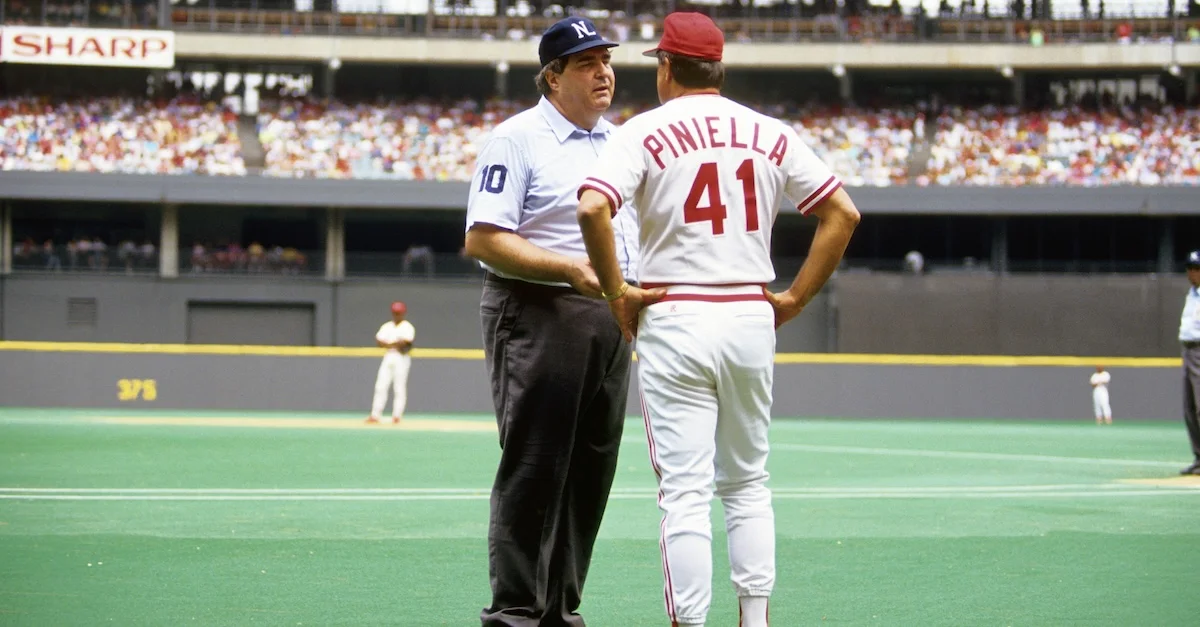
Lou Piniella built a long, vivid career in the dugout, with a World Series title, a record-tying 116-win season and a knack for turning a team’s fortunes around. His Cooperstown case has a harder edge: beyond his championship season in Cincinnati, his clubs won only three postseason series across his final 18 full seasons. That gap between memorable highs and limited October success is the central question as a 16-member Contemporary Baseball Era Committee considers managers, umpires and executives whose greatest impact came from 1980 onward.
Piniella is one of eight names on the group’s 2027 list. It will meet in San Diego on December 6; a candidate needs at least 75% support from the 16 members to earn induction on July 25, 2027, alongside any players selected by the BBWAA. Piniella came within one tally of the threshold on two earlier ballots, which gives his latest opportunity a compelling precedent. It doesn’t erase the statistical questions. His 23 years as a major-league manager produced a 1,835–1,713 record, a .517 winning percentage and 122 wins above .500.
A long career, with one defining championship
The average manager in the Hall of Fame has managed 3,636 games, won 1,943 and posted a .537 winning percentage. That group averages seven postseason appearances, five pennants and 2.5 World Series titles. Piniella managed 3,548 games and also reached the postseason seven times, but his totals of one pennant and one championship leave him behind those averages where the biggest prizes are concerned.
His career rankings reflect his staying power. He stands 16th in games managed and 17th in wins. Among managers outside the Hall, only Bruce Bochy, Dusty Baker, Terry Francona and Gene Mauch rank ahead of him in both categories. His seven postseason appearances tie him for 17th, though 11 contemporaries have matched or exceeded that total. A .517 winning percentage places him 46th all-time among managers in the major leagues.
His record includes a long stretch with the expansion Tampa Bay Devil Rays, whose limited payrolls frustrated him. Even without that 200–285 stint, his career winning percentage would be .533, good for 29th in wins above .500 and 34th in winning percentage among managers with at least 1,500 games. That adjusted mark would sit just ahead of Joe Maddon’s, even with Maddon’s two seasons of 90-plus losses after taking over in Tampa Bay.
Winning percentage alone doesn’t settle a manager’s Hall of Fame case. Connie Mack finished at .486 and Bucky Harris at .493; both are enshrined. But each won multiple championships: Mack took nine pennants and five World Series, while Harris won three pennants and two titles. Casey Stengel finished at .508, then won 10 pennants and seven championships with the Yankees after managing less successful National League clubs. Bochy’s .498 career mark comes with five pennants and four titles. Piniella’s one championship carries less weight beside those records.
From rookie outfielder to the Yankees’ dugout
A Tampa native, Piniella signed with Cleveland as an amateur free agent in 1962. Before establishing himself in the majors, he moved through the Washington Senators, Baltimore Orioles, Cleveland again and the Seattle Pilots. He played four games for Baltimore in 1964 and made a brief appearance for Cleveland in 1968. The Pilots, an expansion club, gave him a spring-training look before trading him to the Kansas City Royals on April 1.
Jim Bouton, a teammate with Seattle, captured Piniella’s temperament in Ball Four, recalling a rookie who hit well but argued with coaches and took slights personally. The account offered an early glimpse of the intensity that later made Piniella’s dugout outbursts famous. He could kick dirt, stomp on his cap or throw a base; those scenes became part of his public identity, alongside his feel for the game.
With Kansas City, Piniella won American League Rookie of the Year honors in 1969. He was a high-average contact hitter with limited power and patience, compiling a .291/.333/.409 line, and he did particular damage against left-handed pitching. He made the AL All-Star team in 1972. Traded to the Yankees in December 1973, he played on four pennant-winning teams, including the 1977 and 1978 championship clubs.
A shoulder problem reduced his playing time late in his career. In 1984, while still a reserve outfielder, he became the Yankees’ hitting coach under Yogi Berra. By June, he had retired as a player and taken on first-base coaching duties. Two years later, he became the manager in a high-pressure organization led by owner George Steinbrenner, where job security was scarce.
Piniella’s first Yankees team won 90 games in 1986 and finished second in the AL East, 5.5 games behind Boston. Don Mattingly, fresh off an MVP season, hit .352/.394/.573. The club again finished second in 1987 despite winning 89 games. After general manager Woody Woodward resigned, Steinbrenner brought Billy Martin back for one final stint and shifted Piniella into the general manager’s office. Piniella resigned from that post in May 1988, saying he missed the baseball side of the work and found office life confining.
Martin was fired for the fifth and final time less than a month later, and Piniella returned to the dugout. The Yankees went 45–48 under him on the way to an 85–76 season. Steinbrenner dismissed him with two years remaining on his contract; Piniella spent the first of those years in the team’s television booth. His New York stretch showed his ability to handle the dugout, but it didn’t give him the stability or results that would define his later stops.
Cincinnati’s sudden peak
In November 1989, Piniella left New York for Cincinnati, taking over from Pete Rose. His first Reds roster had an imposing core: Barry Larkin and Eric Davis led the lineup, with Norm Charlton, Rob Dibble and Randy Myers anchoring the bullpen known as the “Nasty Boys.” The result was the most successful season of Piniella’s managerial career.
The Reds finished 91–71, won the National League West and swept the heavily favored Oakland A’s in the World Series. Oakland had won the previous championship, making Cincinnati’s four-game sweep a sharp statement of the Reds’ strength. Piniella had a title in his first season with the club, a peak he would not match in the rest of his managerial career.
Cincinnati fell to 74 wins in 1991, then rebounded to 90 in 1992. Piniella resigned after the season, soon after a fight with Dibble, but a deeper dispute with owner Marge Schott shaped his departure. Umpire Gary Darling had sued Piniella for defamation after Piniella publicly accused him of bias following a reversed home-run call. Schott declined to cover Piniella’s legal costs, leaving him to pay for counsel himself. The case settled out of court, and Piniella apologized and withdrew his accusation. He later said the lack of support had stuck with him.
Seattle’s rise—and its postseason ceiling
Piniella reunited with Woodward in Seattle in November 1992. The Mariners had managed only one winning season in their first 16 years. With Ken Griffey Jr., Randy Johnson and Edgar Martinez, then later Alex Rodriguez, Piniella oversaw the most successful stretch the franchise had seen. Seattle went 82–80 in his first season, beginning a run of seven winning records in 10 seasons through 2002. The club has reached the playoffs only twice since his departure.
The 1995 Mariners supplied the defining rescue job. They stood at 34–35 in the strike-shortened season and trailed the Angels by 12.5 games, then finished the 144-game schedule tied for first in the AL West at 78–66. Seattle won the one-game tiebreaker, then beat the Yankees in a five-game Division Series. Edgar Martinez’s double brought Griffey home with the winning run and became one of the most enduring plays in franchise history. The Mariners’ surge helped build support for a new publicly funded stadium, approved within a week of the series’ finish. Piniella won the first of his three Manager of the Year awards.
Seattle returned to the playoffs in 1997, 2000 and 2001. By then, Johnson and Griffey had been traded before reaching free agency, and Rodriguez had left as a free agent. Ichiro Suzuki’s arrival helped fuel the 2001 club, which tied the major-league record with 116 wins. Piniella earned his second Manager of the Year award. Yet the Mariners fell to the Yankees in the AL Championship Series in both 2000 and 2001 and never reached the World Series under him.
Those exits weren’t simply a matter of bad luck. Seattle’s bullpen was a recurring weakness, and Piniella’s teams didn’t solve it. The relief groups from 1997 through 1999 each posted an ERA of at least 5.44. Across those seasons, they combined for an AL-low 0.7 WAR. Those results weakened a window that still included Johnson, Griffey and Rodriguez, and they sharpen the tension in Piniella’s Seattle legacy: he built a contender and produced a historic regular season, but his teams couldn’t take the final step.
Later stops and a difficult comparison
After a 93-win season in 2002, Piniella wanted to return to Tampa to help care for his ailing mother. Seattle sent him and infielder Antonio Perez to the Devil Rays for Randy Winn, who was coming off his only All-Star season. Piniella led Tampa Bay to its first 70-win season in 2004, but the club didn’t progress further. Its limited payroll added to his frustration, and he agreed to a buyout with one year left on his contract.
He took over the Cubs in October 2006, succeeding Baker. In Tampa Bay, Maddon took Piniella’s place. Both appear alongside him on the 2027 committee list. Piniella’s Chicago teams, led by Derrek Lee, Aramis Ramirez, Alfonso Soriano and Carlos Zambrano, won back-to-back NL Central titles in 2007 and 2008. The Cubs won 97 games in 2008, the most in the league, and Piniella received his third Manager of the Year award. Both teams were swept from the Division Series. Chicago slipped to 83 wins in 2009, and Piniella stepped down in August 2010, with his mother’s health again a factor.
His candidacy also includes an 18-year playing career, but its 12.5 bWAR adds little to the case. On-field contributions could strengthen the profiles of managers such as John McGraw, Stengel, Joe Torre and Baker, whose playing totals were much higher. Piniella’s résumé instead rests on longevity, the Cincinnati championship and the Seattle revival—with the tantalizing 116-win record and the 1995 playoff run as its clearest peaks.
The committee’s choice
Piniella’s earlier committee results make him a serious contender. He received seven votes on the 2017 Today’s Game ballot and 11 two years later, one short of the required 12. Other candidates who previously missed by one vote have since reached Cooperstown: Marvin Miller, Ted Simmons, Gil Hodges, Tony Oliva and Dick Allen. Hodges’ reported near-miss is unofficial because totals weren’t publicly released at the time.
That pattern offers a reason to watch Piniella’s support, but his latest competition is strong. At the 2024 Era Committee meeting, Jim Leyland received 15 votes and Piniella 11. Leyland had three pennants and one championship; Piniella’s record includes one of each. The 2027 list also features Baker and Bochy, whose managerial résumés combine longevity with substantially more postseason success. Maddon has two pennants and a championship. Executive candidates Sandy Alderson and Brian Sabean bring records built around multiple pennant-winning teams and titles.
My read is that Piniella’s path depends on how much the committee values his role in transforming Seattle, his Cincinnati championship and his long run in the dugout. Those are real achievements, and the 1995 Mariners remain among the era’s most memorable teams. But his .517 winning percentage, modest total above .500 and limited postseason haul give him a thinner case than several peers on the same list. He may again draw meaningful support; reaching the 75% mark will require the committee to weigh his enduring high points more heavily than the seasons that ended short of a title.