Pat Murphy Earns Strong Postseason Marks as Brewers Claim First World Series Title
Milwaukee’s 11-2 playoff run reflected Pat Murphy’s lineup flexibility and bold bullpen calls, with a few close decisions keeping his grades below perfect.
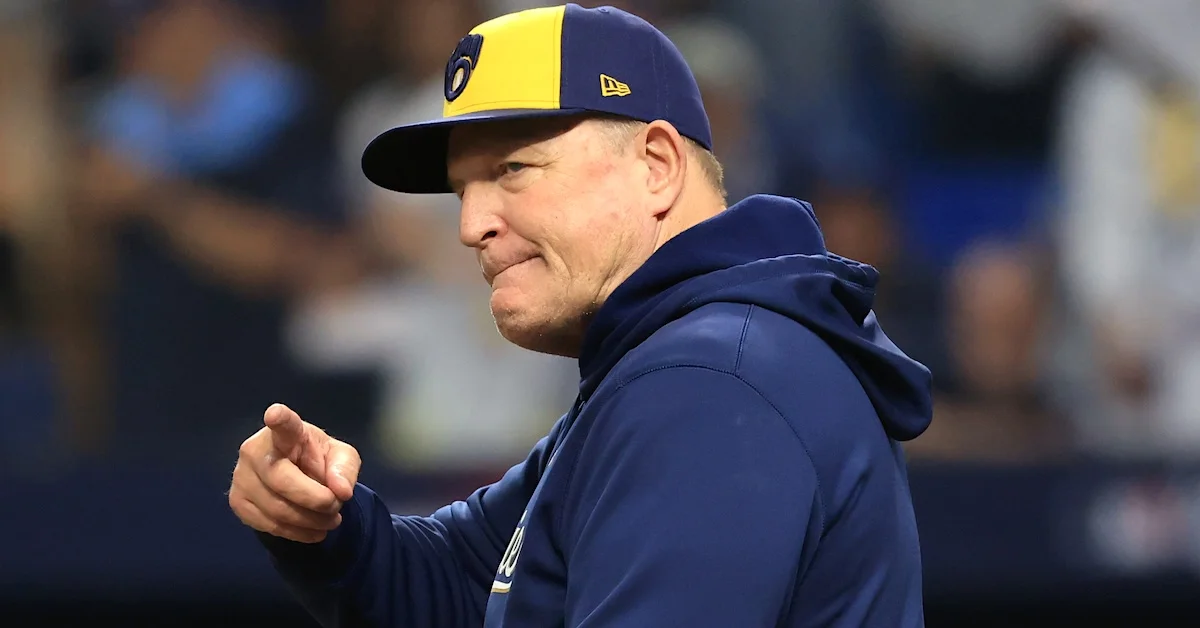
Milwaukee’s first World Series title followed a 103-win regular season and an 11-2 postseason, a run so commanding that manager Pat Murphy’s choices could be easy to overlook. The results don’t prove every call was right. But they leave a demanding reviewer searching for fine margins rather than major strategic failures. Murphy’s postseason grades: A for batting decisions and A-minus for pitching management.
Lineup choices built around the moment
Baseball managers have less direct control over each game than coaches in some other sports: execution and chance still govern much of what happens. Their most consistent influence is choosing who plays, building a lineup with the opponent’s likely relief choices in mind, and earning enough trust to make difficult decisions stick. Murphy handled those responsibilities well.
His willingness to sit Christian Yelich stood out. Yelich had a poor season, but he was a veteran with substantial standing in Milwaukee and the club’s first official captain. Murphy still kept him out of the lineup in unfavorable matchups without creating the sort of controversy that can make a sound decision harder to sustain. That takes buy-in, and it helped Murphy put the matchup ahead of reputation.
Murphy also showed faith in younger or less established options. He started rookie Luis Lara against Tarik Skubal and Blake Snell in the NLCS despite Lara’s rough offensive debut. He was similarly willing to use David Hamilton when the opportunity arose. Those choices didn’t produce an obvious major payoff, but they reflected a manager prepared to act on the matchup rather than default to familiar names.
Lineup construction extended beyond the starting pitcher. Murphy said he and the front office considered how opposing relievers might match up against Milwaukee’s available pinch-hitters late in games. That kind of preparation can shape a game several innings before a pinch-hitter is needed. His approach to the hit-and-run also fit the club’s aggressive identity: keep the play in the opponent’s mind, then use it when the situation offers a chance. William Contreras’ hit-and-run in World Series Game 2 helped fuel a big inning against Tampa Bay.
His platoon decisions showed similar flexibility. Murphy left Sal Frelick in to face left-hander Ian Seymour to lead off the sixth inning of World Series Game 2, even with Milwaukee trailing by a run. The bases were empty, and Seymour’s changeup was his best pitch; his major-league platoon splits had also been negligible. Frelick later homered, but the decision earns credit on its reasoning, not because the result happened to break Milwaukee’s way. Murphy preserved his best bench options for a more pressing spot.
Why the batting grade stops at A
A few decisions leave room for debate. In Game 3 of the NLDS, with the bases loaded and two outs in a tie game, Murphy could have sent Andrew Vaughn up for Brice Turang against Yuki Matsui. Turang had struggled recently, making a pinch-hit change appealing in a high-leverage spot.
Garrett Mitchell’s bunt in World Series Game 1 was another questionable choice. Milwaukee had two runners on and nobody out, a chance to build a larger rally. Mitchell was not a regular bunt-hit threat: he recorded none during the regular season. The attempt traded some of the inning’s potential for a smaller, more controlled advance. Those are legitimate quibbles, but they don’t outweigh Murphy’s stronger lineup work across the postseason.
A flexible bullpen, with a few costly-looking calls
Murphy’s best pitching decisions came from reading the game rather than treating relievers’ roles as fixed. He let Aaron Ashby work through his own trouble in World Series Game 2, judging that the left-hander still had enough to get out of the jam. That also avoided asking Trevor Megill to pitch on consecutive days after a shaky Game 1. Murphy’s broader use of Ashby as a multi-inning reliever paid off again when he let him finish NLCS Game 4, even though the workload left Ashby effectively unavailable for Game 5.
He also showed little hesitation about using his most trusted relievers before the ninth. A closer can face Fernando Tatis Jr. in the eighth if that is where the most important matchup falls. Abner Uribe can enter in the fifth or sixth when the game calls for it, despite having made no regular-season appearance before the seventh. That willingness to move high-leverage arms forward gave Murphy options when the game’s pressure arrived early.
Not every decision was about winning the current inning. Milwaukee lost World Series Game 4, but holding Jacob Misiorowski out of relief preserved the possibility of starting him in Game 5 on four days’ rest. Murphy was also right to remove Misiorowski in the fifth inning of NLCS Game 1: the pitcher still had velocity, but the Dodgers were making frequent contact. And when Misiorowski cramped in World Series Game 5, Murphy treated the issue seriously. With a seventh-inning return unlikely, there was little reason to push him through the sixth.
The close calls behind the A-minus
The roster wasn’t solely Murphy’s decision, but Chad Patrick looked like a more dependable option to carry than Kyle Harrison or Brandon Woodruff. If Murphy strongly wanted Patrick available, the reviewer doubts anyone would have blocked the move; Patrick would have been the preferred choice if a starter became necessary.
In NLCS Game 3, Murphy’s slow hook on Uribe was harder to defend. Uribe’s command had deserted him, and DL Hall was ready. The same game offered another possible adjustment: Robert Gasser had thrown only 72 pitches through five innings, so there was a case for keeping him in. In World Series Game 4, Megill’s removal drew an even sharper objection. He had just recorded the final out of the eighth in a 2-2 game, facing one batter and using five pitches. Ashby replaced him, but Megill appeared to have earned another inning.
Those calls are enough to keep Murphy below a perfect mark, not enough to obscure the larger achievement. Milwaukee’s title wasn’t won solely by its manager, and its dominant run might have survived worse choices. Still, Murphy’s lineup judgment, player trust and flexible bullpen use helped the Brewers navigate October. The championship wasn’t in spite of him.