Bill White’s Hall of Fame Case Spans the Field, the Broadcast Booth and the NL Office
Seven Gold Gloves tell only part of White’s story: his playing, broadcasting and executive work opened doors across baseball.
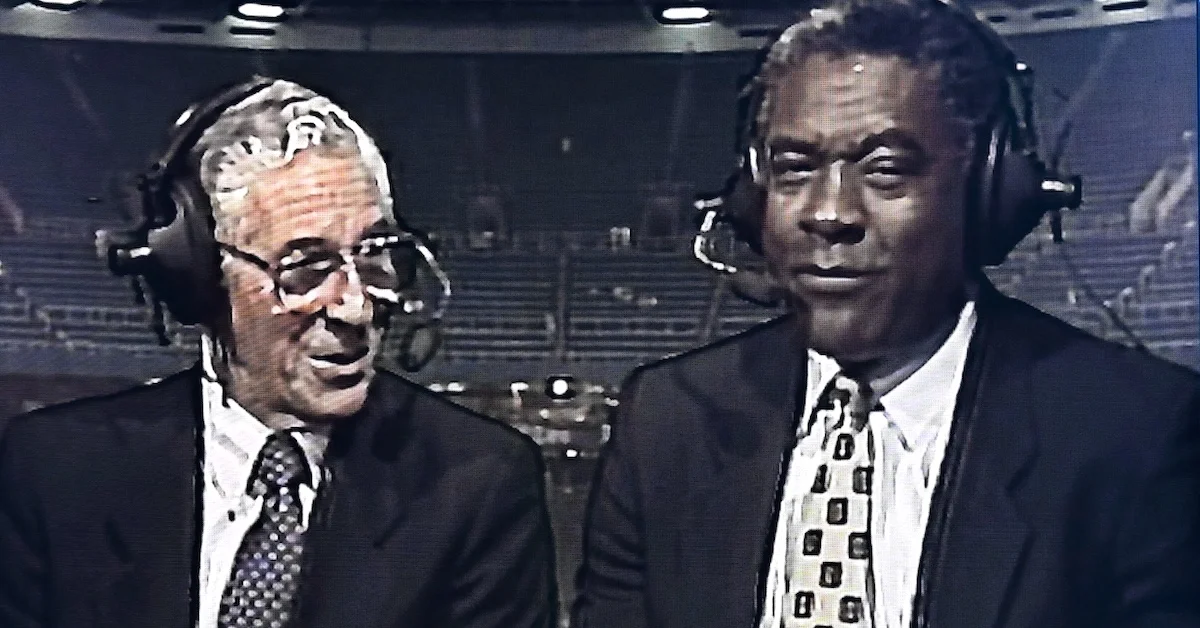
Bill White’s case for Cooperstown is hard to measure with one set of numbers. His playing record falls short of the usual first-base standard, but his career also includes a pioneering broadcast run, a major-league title and five years leading the National League. The question for the 2027 Contemporary Baseball Era Committee is whether those achievements, taken together, add up to a Hall of Fame career.
White is among eight candidates on the committee’s Managers/Umpires/Executives slate, which covers people whose greatest impact came from 1980 onward. The 16-member committee meets in San Diego on December 6. Candidates need at least 75% support to be inducted in Cooperstown on July 25, 2027, alongside any players selected by the Baseball Writers’ Association of America.
White received 10 of 16 votes on the 2024 committee slate, a 62.5% showing that made him a serious contender. The Hall of Fame also presented him with the 2026 Buck O’Neil Award, an honor given every three years for extraordinary work that expands baseball’s appeal and positive impact on society. That recognition and a Cooperstown place measure different things: receiving one does not rule out the other.
A strong player, with a broader case
White played for the Giants, Cardinals and Phillies from 1956 to 1969. He made five All-Star teams, won seven consecutive Gold Gloves and helped St. Louis win the 1964 World Series. His Baseball-Reference totals are 38.6 career WAR, 32.1 peak WAR and 35.3 JAWS, against average Hall of Fame first-base marks of 65.0, 42.1 and 53.5. He finished with 1,706 hits, 202 home runs, a .286/.351/.455 batting line and a 117 OPS+.
Those are credible numbers, but they do not make his playing record an easy Hall of Fame choice on its own. Among first basemen, White ranks 52nd in career WAR and 49th in JAWS. His JAWS sits six places below Gil Hodges, whom the Hall later selected as a player, and just above Boog Powell, Steve Garvey and George Scott. Each of those players was a central figure for multiple contenders, yet their careers illustrate how crowded the position’s historical field is.
The argument for White depends on a wider accounting. His achievements in broadcasting and league leadership were unusual even by the standards of a sport with a long history of notable figures moving among roles. White became the first full-time Black play-by-play broadcaster in any sport and later the first Black National League president, at a time when he was the highest-ranking Black executive in any sport. His playing career gave him a platform; his work after retiring made that platform matter.
Committee guidelines say that candidates with contributions in multiple areas should be considered for their overall impact, while being assessed in the category where they were most prominent. That principle sounds straightforward. Its application has been uneven.
Hodges was selected as a player after a career that had previously fallen short with writers and committees; his managing record, including leading the 1969 Mets to a title, formed part of his wider story. Jim Kaat’s playing record and long broadcasting career also crossed categories. Yet Davey Johnson and Lou Piniella, both of whom had major-league playing careers before more prominent work as managers, each fell short twice. Their playing backgrounds did not appear to move them ahead of Jim Leyland, whose managing work carried his case.
That inconsistency makes White’s candidacy harder to sort into a single box. His playing record is much stronger than a footnote, but the breadth and reach of his later work are what set him apart. The committee has room to consider both.
Baseball arrived after school came first
William DeKova White was born on January 28, 1934, in Lakewood, Florida, to a family of sharecroppers. He never knew his father. His first home had neither electricity nor indoor plumbing. When White was three, his mother moved the family to Warren, Ohio. She worked as a housecleaner, attended secretarial school and later took a civilian job with the U.S. Air Force.
The family lived in segregated housing. White attended Warren G. Harding High School, which was mostly white, and finished second in his class. He was elected senior class president, but the school principal ended the tradition that the class president would share the first dance with the prom queen because she was white. That episode previewed a pattern in White’s life: achievement could open a door, while the rules around him still tried to keep it partly shut.
White lettered in three sports, but he was a stronger student than athlete. “I was first string in nothing,” he recalled in a 2011 interview. “I was about the third-string halfback in football, and in basketball I was the 10th man on a 10-man team.” He received football scholarship offers, yet chose an academic scholarship to Hiram College in Ohio. If professional baseball did not work out within three or four years, he planned to pursue a medical degree.
Baseball changed that calculation. At 18, White homered twice in a championship game at Cincinnati’s Crosley Field, drawing the attention of Giants scout Alan Fey. Fey arranged a tryout with manager Leo Durocher, who watched White drive balls over the right-field wall at Forbes Field in Pittsburgh. The Giants offered him a contract. White agreed after the club raised its signing bonus to $2,500, and his mother gave her consent on the condition that he finish college.
The professional game introduced White to the daily costs of segregation. At the Giants’ Phoenix training base, he was turned away from a movie theater that had no balcony for segregated seating. In the Carolina League, he was the only Black player in the circuit. He faced racial abuse and, during a game in North Carolina, a threat to his life. In his 2011 memoir, Uppity: My Untold Story About The Games People Play, he recalled a fan warning him that he might not make it out alive. White answered with his middle finger. Teammates escorted him to the bus as a crowd threw rocks at it.
From rookie power to seven Gold Gloves
White kept hitting through the abuse, first at Danville, then Sioux City in 1954 and Dallas in 1955. He reached Triple-A Minneapolis in 1956 but played only 20 games there before the Giants called him up to replace a struggling Gail Harris at first base. White’s first major-league plate appearance came against the Cardinals’ Ben Flowers on May 7. He homered, then added a double and a single. The 22-year-old finished his rookie season with a .256/.321/.459 line, 22 home runs and a 108 OPS+.
His progress was interrupted by military service. Drafted in 1957, White missed the entire season and more than half of 1958. At Fort Knox, Kentucky, he quit the baseball team after teammates showed little concern when he was refused service at a restaurant. He returned to the Giants in late July 1958, by then based in San Francisco. Orlando Cepeda, 20, was establishing himself at first base, and White made just 36 plate appearances in 26 games, mostly as a pinch-hitter.
On March 25, 1959, the Giants traded White to St. Louis as part of a four-player deal. Pitcher “Toothpick” Sam Jones was the central return. The Cardinals already had 38-year-old Stan Musial at first, so White played mainly left field, often shifting to first late in games. He hit .302/.344/.470 and made both All-Star teams that season; from 1959 through 1962, two All-Star Games were played each year.
That selection began a six-year stretch in which White was an All-Star every season but 1962. Across those years, he hit .301/.356/.475, posted a 118 OPS+ and averaged 19 home runs, 10 stolen bases and 3.8 WAR per season. His best offensive year came in 1963: a .304/.360/.491 line, 27 homers, 109 runs batted in and 6.0 WAR. His defense added considerable value, too. After moving to first base when Musial changed positions, White won a Gold Glove in every season from 1960 to 1966.
The 1964 season brought his final All-Star selection and a career-best third-place finish in National League Most Valuable Player voting. White hit .303/.355/.474 with 21 home runs and 102 RBI, behind teammate Ken Boyer and the Phillies’ Johnny Callison in the final tally. St. Louis finished one game ahead of both Philadelphia and Cincinnati in a three-team race for the league title. White helped swing the decisive stretch: during the season’s penultimate series, he went 7-for-13 as the Cardinals swept the Phillies in three games.
He was quieter against the Yankees in the World Series, going 3-for-27, but two of his hits came in Game 7. White singled and scored in a three-run rally that extended St. Louis’ lead from 3–0 to 6–0. The Cardinals won the game and the series. His postseason line was uneven, yet that moment tied his best season to the championship that remains the defining team achievement of his playing career.
Speaking up changed the spring-training routine
White’s influence on baseball was not limited to what he did on the field. The Cardinals trained in St. Petersburg, Florida, where Black players had to find their own lodging. Local NAACP member Dr. Ralph Wimbish helped them secure rooms. In 1961, Wimbish said he would stop arranging separate housing, hoping the change would push the team toward integrated accommodation. The Ku Klux Klan responded by burning a cross on his lawn.
That same year, the St. Petersburg Chamber of Commerce invited white players to a “Salute to Baseball” breakfast, while White, Curt Flood and Bob Gibson were left off the guest list. White decided to speak publicly. He told Associated Press reporter Joe Reichler that the exclusion had become impossible to ignore, asking how long Black players would be expected to accept unequal treatment without saying anything. “This thing keeps gnawing away at my heart,” he said. “I think about this every minute of the day.”
Local officials called the missing invitations a misunderstanding. A Cardinals representative said some players had been left off because they were not staying at the downtown hotel and the breakfast was early. That explanation sat awkwardly beside the fact that the hotel itself was segregated. White declined a belated invitation.
The next year, the Cardinals required that players be allowed to stay at the same hotel regardless of race. Musial and Boyer, who usually stayed with their families in beach houses, joined their teammates there as a visible show of support. White’s public stand had helped turn a private arrangement into a club issue. At the start of spring training in 1962, half of Florida’s 14 training clubs had integrated their facilities. The Tigers in Lakeland remained the last holdout that season and integrated the next year.
White’s actions came with career risks. Players of his generation could not assume that challenging a club or a local institution would be welcomed, especially when their standing depended on managers and executives who controlled playing time. He put his name to the criticism anyway, and the Cardinals changed their lodging practice. That part of his record connects the player to the broadcaster and executive who would later hold positions few Black people had reached in the sport.
Injuries ended a productive final run
White remained productive in 1965, but the Cardinals slipped to seventh place in a 10-team league, finishing 80–81. General manager Bob Howsam then reshaped the infield, trading all three infielders older than 30: Boyer, second baseman Dick Groat and White. Groat and White went to Philadelphia in a six-player deal.
White disliked Phillies manager Gene Mauch, whom he described as “a control freak,” but the move did not stop his strong run. He posted more than 5.0 WAR for the fourth season in a row. The following winter, though, a paddleball game changed the direction of his career. In December 1967, he tore the Achilles tendon in his right foot. He had surgery, came back too soon and injured the ankle again in spring training.
White played 90 games that season, relying on regular novocaine shots and amphetamines to get through it. He hit eight home runs, ending a run of six straight seasons with at least 20. He spent one more year in Philadelphia before returning to St. Louis at 35. His role was mostly as a pinch-hitter, and he retired at the end of the season.
The injury-shortened finish helps explain why White’s career totals do not match the length and peak production associated with many Hall of Fame first basemen. It does not erase the value he built before the injury: strong defense, sustained All-Star form, a major role on a championship club and offensive seasons that could change a close pennant race.
A pioneering voice in New York
White’s work in broadcasting started before his playing days ended. He hosted a radio show on St. Louis station KMOX and taped a pregame program for Philadelphia’s WFIL-TV. He also met with Tasty Baking, the Philadelphia show’s sponsor, after the company had faced boycotts over racial discrimination, and pressed it to hire more Black employees.
After retiring as a player, White returned to Philadelphia as the first sports anchor for WFIL’s Action News. He also became the first Black broadcaster to call a National Hockey League game. His college basketball work caught the attention of ABC Sports broadcaster Howard Cosell, who later recommended White to Yankees president Mike Burke when the club needed a new play-by-play announcer.
White was not hired because he had years of baseball broadcasting behind him; he did not. In a 2021 account, he recalled that he wanted the job on its merits, while also recognizing what his presence could mean to young Black viewers. At his introductory press conference, Burke said White was the best person for the job. White blushed when someone compared his place in broadcasting to Jackie Robinson’s role in integrating the major leagues.
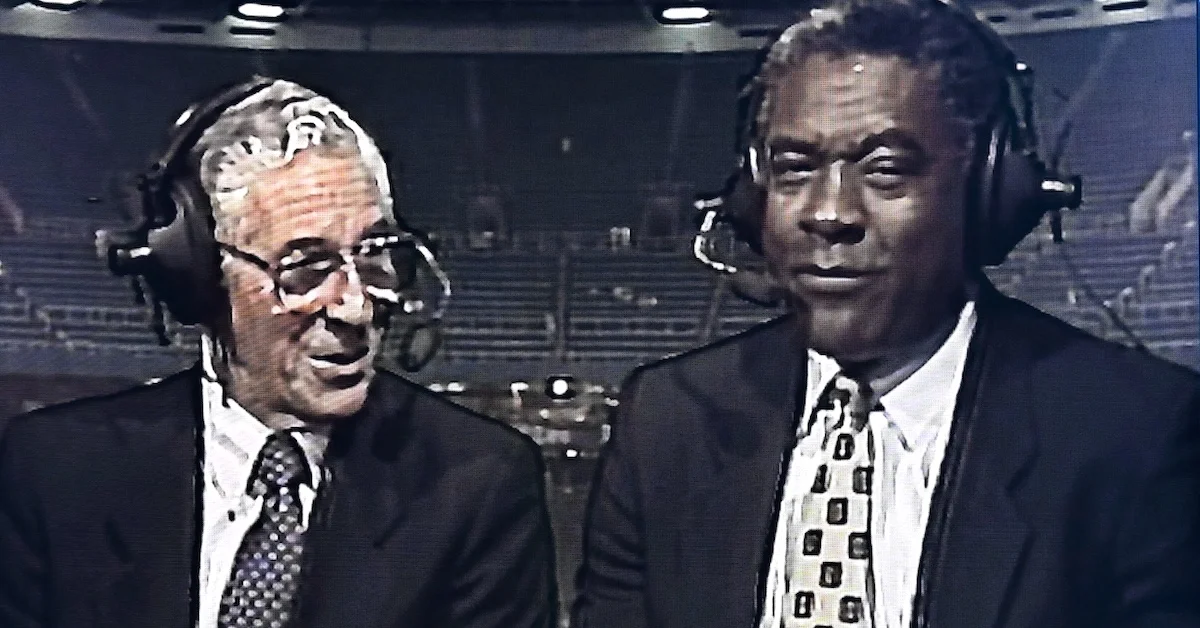
He joined Phil Rizzuto and Frank Messer on Yankees television and radio simulcasts, becoming the first full-time Black play-by-play broadcaster for a professional sports team. Before taking the job, White asked Larry Doby and Elston Howard about Rizzuto. Doby, the American League’s first Black player, had played against the Yankees; Howard had broken the club’s own color barrier eight years later. Both told White that Rizzuto had made an effort to welcome them. White arrived expecting a fair chance and found a colleague who helped him learn the job.
The early lessons were practical. White had no prior experience calling baseball and struggled with some calls in spring training. The Yankees briefly removed him from play-by-play. He practiced with a tape recorder and with club public relations man Marty Appel, working until his delivery settled. Years later, Dodgers broadcaster Vin Scully offered advice after White sent him recordings.
The broadcast partnership that followed lasted well beyond the initial adjustment. White, Rizzuto and Messer worked together through 1985, with White and Rizzuto continuing as a pair through 1988. The booth relied on a shared comic rhythm: Rizzuto’s freewheeling habits and White’s steadier presence gave the broadcasts a distinctive sound, even during the Yankees’ early-1970s struggles. Their on-air rapport grew into a close friendship away from work.
Rizzuto was famous for relaxed calls, restaurant recommendations and occasional early exits to beat traffic. A joke held that “WW,” short for “wasn’t watching,” was the most common entry in his scorebook. White became the natural straight man, but the warmth between them was real. When Rizzuto was dying in 2007, White visited him in hospital and held his hand. “I loved Phil Rizzuto,” he said.
White’s most famous call came in 1978, when Bucky Dent hit a three-run home run at Fenway Park in Game 163, the tiebreaker between the Yankees and Red Sox. The play became one of the defining calls in New York sports history, a broadcast moment that joined White’s work to a game fans would remember for decades.
His national assignments expanded as the Yankees returned to the top. White worked the club’s broadcasts for the 1976, 1977, 1978, 1980 and 1981 American League Championship Series. For CBS Radio, he called five World Series: 1976–78 and 1987–88. From 1977 to 1979, he was part of ABC’s three-person Monday Night Baseball crew with Al Michaels and Bob Gibson. He also handled pregame reporting for the Yankee Stadium games of the 1977 World Series and presented the trophy that year. Outside baseball, he worked on ABC’s coverage of the 1980 and 1984 Winter Olympics.
White said he twice turned down offers from Yankees owner George Steinbrenner to become the team’s general manager. Accepting would have made him the second Black general manager in major-league history, after the Braves’ Bill Lucas. White chose to stay in broadcasting, a career that had already broken ground and given him a national audience.
Leading the National League
In September 1988, National League president Bart Giamatti was chosen to become commissioner, leaving the league’s top post open. Peter O’Malley, who led the six-person search group and had previously helped connect White with Scully, called him three times to persuade him to interview. White’s first response was, “Are you serious?” He was reluctant to give up his lifestyle and return to a daily executive role, but after meeting the people involved, he understood that the offer was genuine.
The search group and the league’s 12 club owners backed White unanimously. He received a four-year contract and became the first Black person to lead either major league. At the time, baseball was facing criticism over the scarcity of Black managers and executives. The debate had intensified after Dodgers general manager Al Campanis made racist remarks on ABC’s Nightline in 1987, suggesting that Black people lacked some of the qualities needed to become managers or general managers. In the following two years, teams hired only one manager, Frank Robinson, and a small number of executives, including Astros general manager Bob Watson.
White understood that his appointment carried meaning beyond his own résumé. “Let’s face it, they wanted a black National League president,” he told New York Times reporter Claire Smith in 1991. At the introductory press conference, O’Malley said the group had selected White because he was the best person for the role and that race had not been a factor. White said he could not speak for the search group, but saw the job as a chance to move on from 18 years of describing ground balls to first base.
Hank Aaron, who had spoken publicly about baseball’s hiring practices, called White’s appointment comparable in importance to Jackie Robinson’s. Gibson told Smith that White needed to accept the role for other people as well as for himself. White was now in a position to make decisions, but he also knew the limits of the post. He told Smith that work to improve opportunities for minorities and women was a positive part of his role, while cautioning that it could not take the place of running the league effectively.
His responsibilities included discipline for on-field personnel and oversight of National League umpires. The two leagues would not combine their umpire groups until 2000. In 1990, White clashed with Richie Phillips, head of the umpires’ union, over umpire Joe West’s handling of an ejection involving Phillies player Von Hayes. White barred West from touching players while trying to break up fights and said that both West and Phillips had misrepresented events.
Phillips called White’s public criticism an unprecedented lack of support for umpires and appealed to commissioner Fay Vincent, who had taken over after Giamatti’s sudden death in October 1989. White said he would resign if Vincent did not back him. Vincent upheld the restriction on West, required White and West to keep future disagreements private and directed White and American League president Bobby Brown to create a policy on umpires’ roles in fights. National League owners backed White as well.
White also took part in the 1989 decision to ban Pete Rose for gambling, after nearly suspending Rose for shoving West the week before. In 1993, he joined the decision to suspend Reds owner Marge Schott for using racially and ethnically insensitive language. His remit also included league expansion. In 1991, White and three owners on the selection group chose Denver and Miami from 18 ownership groups in 10 cities. The two clubs joined the National League two years later after their ownership groups agreed to a $95 million franchise fee.
Expansion brought a sharp disagreement over hiring. The Rockies had not interviewed minority candidates for senior front-office roles, despite a hiring requirement first set by Giamatti in 1989 and backed by Vincent. White said the club’s actions disappointed him, pointing to promises that Black and Hispanic candidates would be interviewed.
White tried to advance hiring opportunities while keeping that work behind the scenes, mindful that his authority depended on doing the league job well. He also found the role difficult to navigate. Labor and management, players and umpires, and club owners each exerted pressure, often in competing directions. In a 1992 speech to the Black Coaches Association, he described his anger at dealing with people he regarded as racist and bigoted. The candor was striking from an executive who had often tried to keep his advocacy private.
The owners’ removal of Vincent and installation of Bud Selig as acting commissioner alarmed White, who believed concentrating authority in the commissioner’s office could weaken the league presidents. He retired from the National League post in 1994. From 1994 to 2001, he served on the Hall of Fame’s Veterans Committee. He helped select Rizzuto, his old broadcasting partner, and took part in decisions that brought in Doby, former teammate Jim Bunning and Negro Leagues stars Leon Day, Bullet Rogan, Turkey Stearnes and Willie Wells.
The committee must weigh the whole career
White’s earlier efforts to reach Cooperstown produced little momentum. In three years on the writers’ ballot, beginning in 1975, he peaked at 1.9%. He later appeared on two composite Veterans Committee slates that combined players and people from the managing, executive and umpiring ranks. The first received no selections; White earned 28% of the support in 2003 and 30% in 2007. On a 2010 slate limited to executives, he received two votes or fewer from the 12 committee members, as did five other candidates. He did not return to a committee slate until 2024, when his 10 of 16 support showed that his candidacy had gained serious traction.
The comparison with other honorees is instructive, though no two résumés are identical. White’s playing numbers place him 18 JAWS points below the average Hall of Fame first baseman, around the same distance that Jim Kaat sits below the average starting pitcher. Kaat had a longer broadcasting career, but his work did not carry the same firsts and he did not lead a league. Hodges’ playing record was also not a clear match for the position’s standard, while his post-playing achievement included a championship as manager of the 1969 Mets.
White’s record covers three fields, and the significance comes from how those fields connect. The Gold Gloves and All-Star seasons establish that he was a strong player in his own right. His work calling games made a new path visible to Black broadcasters. His leadership as National League president placed him in a position to shape league operations and press clubs on hiring. His stance on segregated spring-training housing showed that he was willing to use his public voice before he held an executive title.
That combination gives the committee a distinct question: how much should a Hall of Fame career account for impact beyond playing statistics? White does not have the statistical case of an average Hall of Fame first baseman, and there is no need to pretend otherwise. But judging him only by first-base rankings leaves out much of what made his career consequential. The committee’s own guidance allows it to consider the whole contribution.
White received a respectable showing in 2024, but the 2027 slate is unusually strong. That makes his route less certain. It also makes the standard of judgment more revealing: if the committee considers candidates across categories, White’s playing, broadcasting and executive work belong in the same assessment. His accomplishments do not depend on a single championship or a single milestone. They form a career in which he helped win on the field, became a familiar voice in homes across the country and took responsibility at the top of a major league.
White is 92. His playing record alone may not be enough to carry him into Cooperstown, but his influence on baseball reaches well beyond the first-base box score. The committee has a chance to recognize the full career: a Gold Glove first baseman who helped deliver a World Series, a broadcaster who opened a new route into the booth and an executive who carried that experience into the National League office.