Connor McDavid’s Four Points Couldn’t Quiet the Oilers’ Anger After Late Hit
McDavid had a goal and three assists in Edmonton’s 5-4 loss, but a hit into the post—and Podkolzin’s penalty—set the game’s tone.
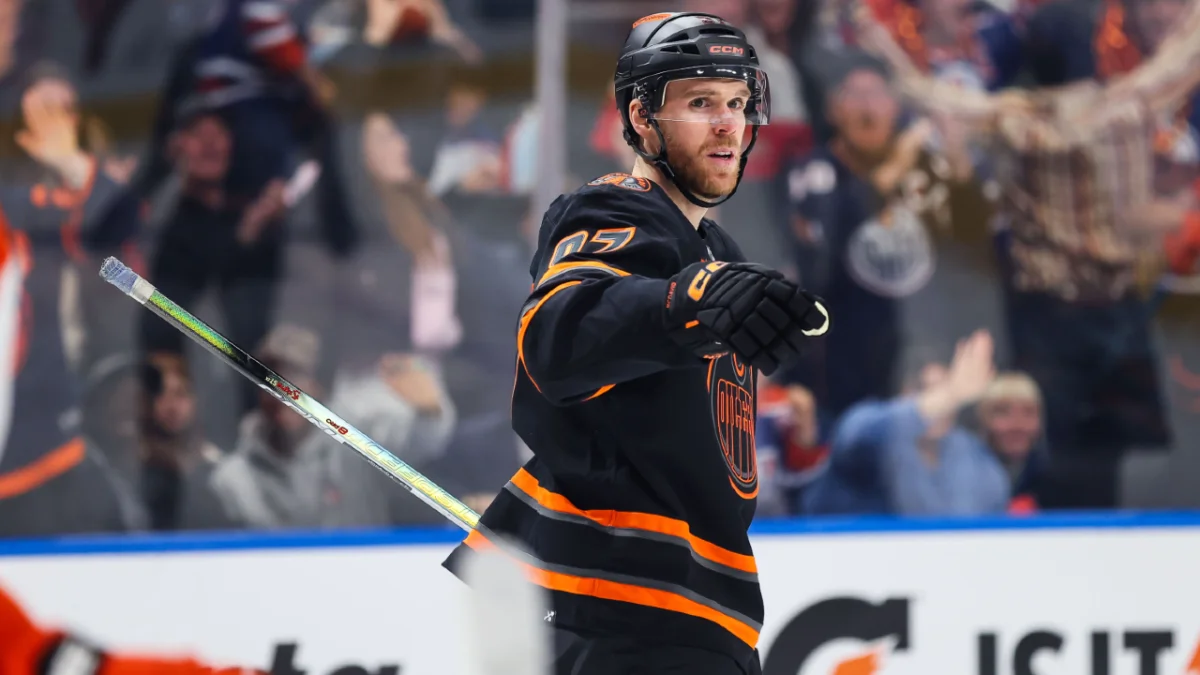
Connor McDavid left Edmonton’s 5-4 loss to Anaheim with a goal and three assists, extending his point streak to all 17 games this season. The performance would usually dominate the conversation. Instead, a hit into the goalpost early in the game, and the Oilers’ response to it, became the story.
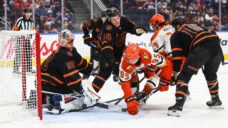
McDavid had already got around Ducks defenceman Jackson LaCombe and put a shot on net when Drew Helleson arrived and drove him into the far post. McDavid stayed down before getting up to speak with Helleson. Vasily Podkolzin then stepped in, fighting Helleson and receiving an instigator penalty and a game misconduct.
“You’re going to hit me like that and there’s going to be a response, that’s just the way it is,” McDavid said after the game. He wasn’t arguing that opponents should give him an easy route to the net. His objection was to contact that came after his scoring chance, in a spot he knows can cause serious harm.
Why the collision struck a nerve
McDavid has been badly hurt on similar plays. As a rookie, a collision with Philadelphia’s Brandon Manning sent him into the end boards and left him with a broken collarbone. In the final game of the 2018-19 season, Calgary defenceman Mark Giordano took him down on a drive to the net, sending him into the post at speed. McDavid tore his left knee and spent the summer recovering.
That history explains why the early hit felt personal. McDavid briefly went to the dressing room, then returned to the game. He said he had stayed down to assess how he felt, adding that few players know what it’s like to race into a post or the end wall at full speed.
“Those are plays that I’ve been really, really hurt on before,” he said. “Those type of plays I find to be dangerous.” He described this one as a close call, and said he didn’t like what happened after he had already taken his shot.
McDavid’s distinction is about timing and risk. A defender who reaches the spot first, or makes contact while stopping an active play, is part of the contest. A late hit into the goal structure after the chance has passed is different, in his view. The question he raised was simple: what did Helleson gain by driving him into the post after his partner had been beaten?
Podkolzin’s response, and Babcock’s objection
Podkolzin answered the hit with a flurry of punches. Helleson stopped defending himself, but Podkolzin kept the fight going, drawing the instigator and game misconduct. McDavid called the penalty an unfamiliar call and said he appreciated his teammate’s reaction, while still objecting to the punishment.
Edmonton head coach Mike Babcock focused on what started the confrontation. “The instigation of the whole thing was when they run our guy into the net,” he said, questioning whether the contact that sent McDavid into the goal was allowed. Babcock later said the Oilers’ reaction was what it should have been and that the team had to look after its captain.
McDavid acknowledged that emotion can change a game. He said people may see him as a robot, but he has feelings too, and that moments like this can rattle a team. The exchange was striking partly because post-game displays of anger are unusual from the Oilers captain.
His concern reaches beyond his own history. The end boards have prompted a player safety measure in the form of no-touch icing. McDavid argued that the net and post can be just as dangerous, pointing out the risk to both the skater and the goalie. He said that a comparable hit into the end wall at full speed could bring a five-game suspension, and asked why contact at the net should be treated differently.
A team message in a costly loss
The incident gave an already emotional game an edge. Edmonton and Anaheim were facing off after the Ducks eliminated the Oilers in the first round last spring. For Edmonton, the hit also touched a sensitive subject: the health of a captain whose ability to take defenders on at speed puts him near the net often.
The source article also points to an incident eight days earlier, when the Calgary Flames stood by after Colton Dach sent goalie Devin Cooley out of the game and later went hard into Dustin Wolf. Against that backdrop, Podkolzin’s quick response sent a clear message inside the Oilers’ room. It’s unlikely to change how defenders across the NHL approach every net drive, but teammates saw Podkolzin act when McDavid was put at risk.
The result still went Anaheim’s way. Leon Draisaitl scored his 14th goal of the season late with the goalie pulled, but Edmonton’s comeback effort wasn’t enough to erase the deficit. McDavid finished with four points, including a short-handed goal and three assists. He has 10 goals and 34 assists for 44 points in 17 games, and his 34 assists are more than any other NHL player has points.
Edmonton also dressed emergency backup goalie Brett Epp as its backup, with Tristan Jarry ill and the rest of the team’s goalies hurt. Epp was the first emergency backup goalie to dress for a game this season.
The Oilers leave with a loss and a sharper question about how dangerous contact at the net should be handled. McDavid’s numbers continue to set the pace, but his reaction made clear what he wants teammates to recognize: when a play is over and a collision still sends him into the post, he expects the team to respond.