Richie Porte’s Hammer, a Fence and the Brother He Lost
A half-built fence became a lasting memorial to Tom Porte, whose death reshaped Richie’s understanding of family, grief and asking for help.
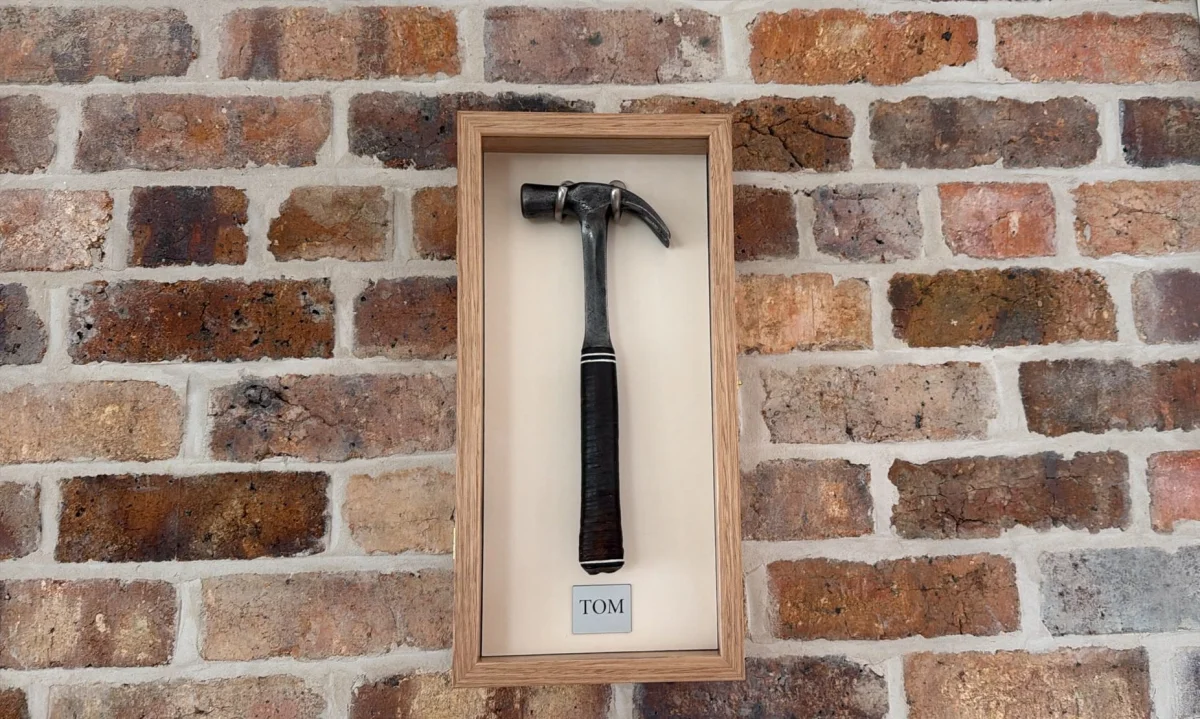
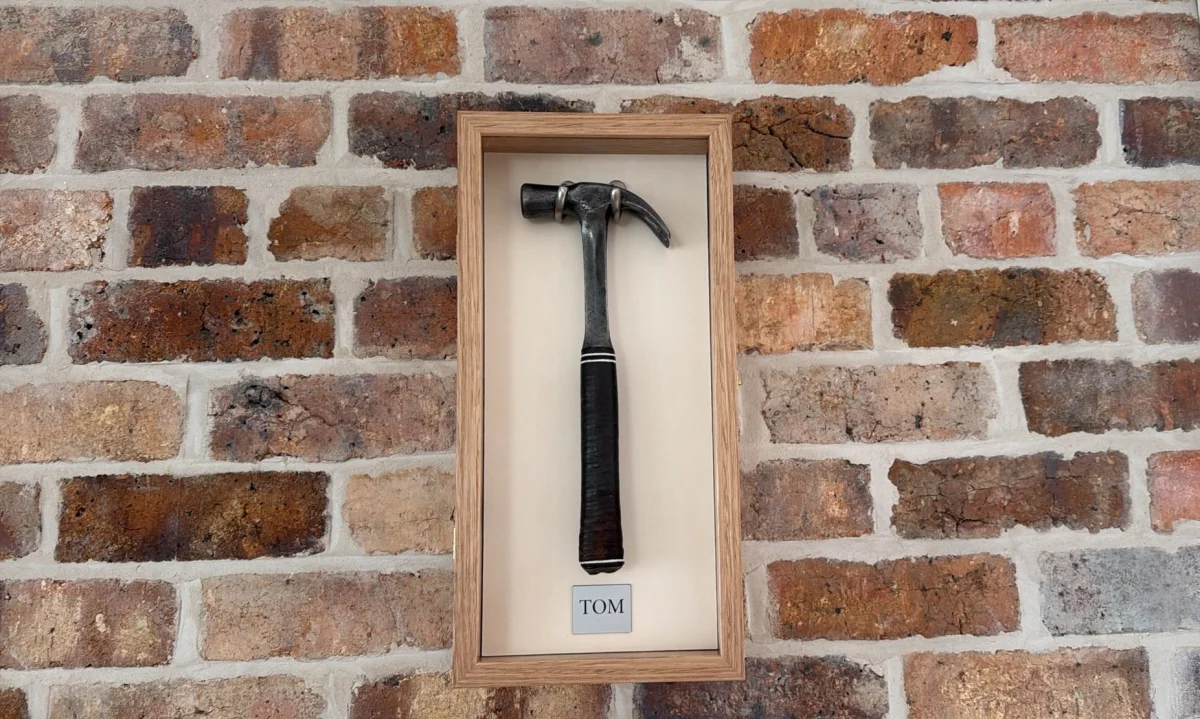
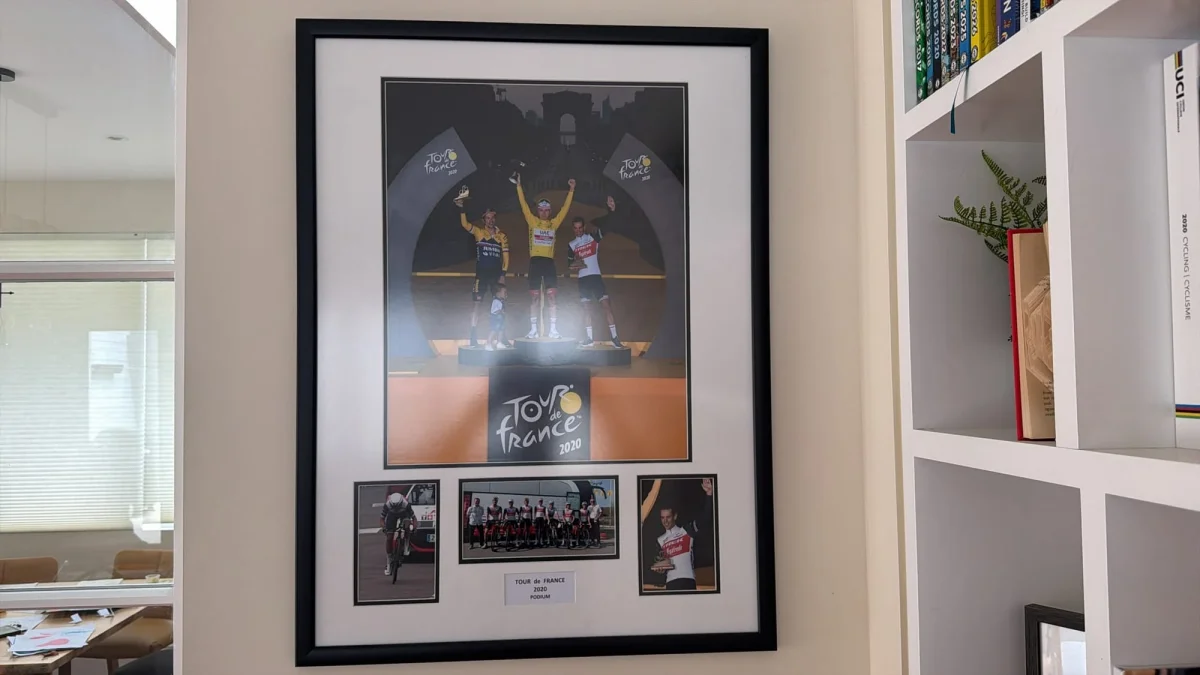
Richie Porte’s proudest sporting memory once had a place of honour in his home: a photograph from the Champs-Élysées in September 2020, with Richie on the Tour de France podium beside Tadej Pogačar and Primož Roglič. Today, that picture hangs elsewhere. In the lounge room, a worn Estwing hammer sits in a frame, Tom’s name on a plaque below it.
It belonged to Richie’s youngest brother, a builder who spent his working life making things for other people. The hammer’s grip has been smoothed by years of use. It is also a reminder of a family project that stopped halfway through, and of how a day can hold both ordinary happiness and a loss no one saw coming.
On 18 October 2025, Richie and Tom began building a fence at Richie’s home in Launceston, Tasmania. Tom brought concrete and gravel for the posts. Kieran, another of the four brothers, helped with the digging. Richie was supposed to lay out the palings a metre apart so Tom could nail them into place.
He got the spacing wrong. Tom told him so. “That’s not a metre each,” he said, “and it’s not helpful when it’s not a metre.” The next morning, Richie fetched a tape measure and marked the palings properly. Tom never returned to finish the job. He died by suicide that night, aged 37.
“Behind his family, and his kids especially, that was his most proud thing,” Richie says of the hammer. That distinction tells its own story: the object on the wall came from a trade Tom loved, while the most important work he did was the care he gave to the people around him.
The brother who kept everyone together
The Porte boys grew up in northern Tasmania in a swimming family: Nick, Kieran, Richie and then Tom. Their father, Ian, worked as a tradesman. Their mother, Penny, had a way with words that, Richie jokes, none of her sons inherited.
Tom was the youngest and the smallest until, around the age of ten, he shot past Richie in height. After that, Richie called him his “big little brother”. Tom was younger, but also the one who looked out for him.
Three brothers went into the building trades: one became an electrician, one a bricklayer and one a builder. Tom, Richie says, was the family’s voice of reason. He had little time for the pecking order some Australian building sites can produce. If one brother was pushing a labourer too hard, Tom would take him aside with a plain warning: “Not on my building site.”
At family barbecues, Tom was often the one checking how everybody was doing. He might arrive late after work and leave early because he lived out of town and had a six o’clock start. He’d spot a task around the house, inspect something he had built, or find the person sitting by themselves and draw them into conversation. His thongs were always left at the door; there was usually a spare pair waiting at the Porte home.
“He was the glue of our family,” Richie says. “A knockabout Aussie fella. There’s not many people that would have had a bad word to say about him.”
Richie was the brother who left. For nearly two decades, cycling took him far from home, racing for Saxo Bank, Sky, BMC, Trek and Ineos. The distance between Australia and the European racing circuit made the separation from his family especially hard.
“I don’t think people quite understand how hard it is for a Kiwi or an Australian cyclist,” he says. “I love my family as much as the South American riders do, but the Colombian guys are allowed to go home whenever they want, whereas being from Australia it’s not that easy. You make so many sacrifices.”
Tom remained close even when Richie was on the other side of the world. They messaged or spoke every day. Richie can’t recall a call that left him wishing he had said something different. That daily connection became even more precious after Richie returned to Tasmania and they began sharing work.
From the Tour to the building site
In 2019, three years before Richie retired, Tom sent him a message with a simple offer: “When you retire, just come and labour for me, help me on the building site. You’ll love it. We’ll have so much fun together.”
They imagined buying blocks of land and properties that needed work, renovating them and selling them. The idea might eventually have become a business. For Richie, it first became a way back into his brother’s everyday life after years of airports, hotels and suitcases.
He got two and a half years of working alongside Tom. He says he wasn’t much use at first. He couldn’t locate a bugle screw at the local hardware store and would ring Tom while he was on a roof to ask which nails to buy. Sometimes Richie returned with a coffee to make amends when Tom really needed another pair of hands.
Tom met his inexperience with encouragement. “He never, ever said anything other than encouragement,” Richie says. “I remember him saying, ‘you find this all so hard, but one day it will just click for you, Rich.’”
It never quite clicked, but the work gave them time together. Tom marked out foundations with spray paint and wrote Richie’s name on the ground beneath, borrowing the look of fans’ names painted on roads at the Tour. He found it hilarious when grown men got upset after Richie, a Tour de France third-place finisher, took their Strava segments. At lunch, he shared slices of Mars bar he had made at home.
“We lived out of each other’s pockets,” Richie says. “It was the most brilliant time of my life.”
That closeness is at the heart of the story the hammer now tells. The cycling photograph records an extraordinary public achievement. The tool marks the years Richie got to spend beside his brother, learning a trade Tom knew well and sharing the unremarkable routines that had been missing while Richie raced abroad.
A good day, and the last message
The fence day began with a mishap. Tom’s trailer came loose on one of Launceston’s busiest streets, denting the back of his truck and scattering supplies across the road. Only one passerby stopped to help, a man with his children in the car. Tom was angry, mostly at himself. Richie told him not to worry; they would sort it out.
By the end of the day, Tom was in good spirits. Richie has security camera footage from the afternoon and has watched it again. His daughter, Eloise, stubbed her toe. There was a little blood and a lot of noise. Tom’s four-year-old son, Eddy, asked whether she was all right. With mock seriousness, Tom told him she was gravely hurt, would need hospital treatment and might have to have her toe cut off.
Later, Kieran levered a crowbar beneath a concrete slab while Richie leaned close. Tom stopped them. “Whoa, whoa, Rich. That’s not safe. Get your face out, you’ll get hurt.”
The brothers also spoke about a young Launceston builder who had recently died by suicide. Tom understood, he said, the pressure a young man in the trade could face, but believed it wasn’t the way out. “That was a man, say, eight hours before,” Richie says. “Talking about it.”
That evening, Tom messaged Richie to say he had never felt so low. Richie had never received a message like that from him. He asked directly whether Tom wanted him to drive down and see him.
“No, Rich, I’ll be fine. I’ll bounce back. I always do. I’ll talk to you tomorrow. We’ll build the fence together.”
Their last message came at 8:04 p.m. Richie put down his phone and read to his children. He planned to get up early for a ride. He had asked Tom if he wanted company and trusted the reassurance he received.
The morning the fence changed
Sunday followed the usual pattern. Richie rode with a friend and chased a Strava segment, stopped for coffee, mowed the lawn with his son, then measured the fence palings at one metre apart.
He was near the garage, wondering why Tom had not arrived, when Penny called. It was 9:34 on a Sunday morning, unusual enough that Richie rang her back. He could hear something was wrong in her voice. His first thought was his father, then in his seventies, whose hard-working life had taken a toll on his heart.
Penny said: “My baby’s gone, Rich. Tom’s gone.”
Richie went inside and told his wife, Gemma, “Tom’s dead.” Then he fell to the floor, curled into a foetal position and wept.
Kieran had planned to come over later to finish the fence. Gemma knew the news could not be delivered over the phone. Richie made the call and managed only a few words: “Hey Kik, can you come around?”
Before Kieran arrived, Richie called Heath, a close friend who had lost his own brother to suicide 25 years earlier. Heath came straight over. He was there when Kieran walked up the driveway with his tools, expecting a day of work. Richie took his brother outside and told him. Kieran punched the wall and broke his hand.
“When I look at it now, I think Kieran needed that pain,” Richie says.
George, another close friend and a psychiatrist, was the next person through the door. He was devastated too; he had loved Tom. The house had become a place for the family to gather around a grief none of them could make sense of.
Finishing what Tom started
The fence was still half built the next morning. Palings lay across the driveway. Four of Richie’s friends took the day off work and came to finish it. Richie could stand outside and speak with them for about a minute before breaking down. He would go back inside; they kept working.
“That’s probably the only good that’s come out of my loss,” he says. “Just to see how kind people are.”
Two days later, Richie saw his father cry for the first time. Tom and Richie had recently finished a pair of townhouses. The last task was to attach a sign to the wall. Tom’s eldest son, Sonny, and Richie’s son, Luca, did it together, while Ian lifted Sonny so he could reach. The boys completed the final part of their fathers’ build.
Richie says six other tradies died by suicide in Launceston in the eight days around Tom’s death. Since then, the Porte family has met with the family of the young builder Tom had discussed that Saturday. They talked about their sons and have kept in touch.
“It was a bleak time,” Richie says. “It really was.”
Living without an answer
A year later, Richie no longer expects grief to provide an explanation. He still returns to the contradiction: Tom had spent that afternoon protecting his brother from a crowbar, joking with a child and talking about another man’s death. Richie struggles to reconcile those moments with the loss that followed.
“It makes no sense,” he says. “Tommy never hurt anyone in his life. But then to hurt us, his family, who he adored.”
For years, the brothers swam together most evenings. Tom found swimming boring, but always felt better after they went. At some point, he stopped. Richie wonders whether that mattered, then recognises he cannot know. “I don’t really know what got the better of him,” he says.
He has replayed the 8:04 message countless times. Nick had also planned to visit Tom that night. Richie asks himself whether they missed an opportunity, but says the answer isn’t simple. If Tom had told him he needed him, Richie would have driven straight over. A traffic jam formed at Tom’s funeral; Richie believes every person caught in it would have dropped everything had they known Tom needed someone.
“He just didn’t really give us that,” Richie says. “He assured me. And I trusted Tom implicitly.”
A conversation with George’s wife offered Richie a different way to hold the loss. She had lost her mother to motor neurone disease. Richie told her that Tom had so much life ahead of him, and that it seemed unfair for that life to end.
She stopped him: “No, no, no, Richie. It’s an illness. Your brother was ill, like my mum was.”
“Sometimes women say it better,” Richie says. He holds onto that understanding without claiming expertise. “If we were talking about cycling, I think I could nail it. But I’m not a mental health expert. I’ve got lived experience, and I guess that’s all I can really say.”
Richie’s own grief became a concern for George. In May, seven months after Tom died, George sat him down and said he was worried. Richie says he wasn’t at risk of doing what his brother had done, but he needed support. He began taking antidepressants, while questioning whether he had a right to feel depressed when so much else in his life was good.
“Other than losing my brother, I have a fantastic life. I have a brilliant wife who’s done the heavy lifting whilst I’ve been such an empty vessel. And she loved my brother too.”
Swimming and riding with friends have helped. He has never returned from either wishing he had stayed home. Those routines don’t resolve the loss, but they give him somewhere to put his energy and a reason to keep moving through the days.
Blue palings and a name on the wall
On the night Tom died, Richie’s son Luca sent his uncle a picture of the puppy the family planned to bring home. They intended to call him Teddy. Tom replied: “He’s a handsome little fella, Luca, but I think the name Neville suits him better.” The puppy became Neville.
Richie took Neville on early walks through the hardest months, often crying along the way. In July, someone left a gate open and Neville was hit by a car in front of the family. On the anniversary, a friend suggested imagining Tom throwing a ball for Neville somewhere beyond reach.
“Neville was a character, Tom was a character,” Richie says. “They’re up there, or wherever the hell they are, hanging out. Little things like that make you laugh, and give you a bit of comfort.”
Richie had never wanted a tattoo. Now he has Tom’s initials on his arm, where he sees them while swimming, riding or sitting on a plane. The idea came from Elke Weylandt, whom he worked with at Trek. Her brother Wouter died during the 2011 Giro d’Italia, a race Richie was competing in. A few weeks after Tom’s death, Richie asked if he could copy the tattoo she had made in her brother’s memory. She told him to go ahead.
Wouter died at the 2011 Giro d’Italia, a race Richie was competing in. That shared history gave the request a personal meaning, but Richie’s tattoo is his own daily marker. “He lives on,” he says. “I’m going to carry that the rest of my life.”
The fence is now black, except for the last two palings Tom nailed into place on that Saturday. Richie painted them blue, following the Blue Tree Project, which paints dead trees blue across Australia to prompt conversations about mental health. When he rides past, the colour brings Tom back to mind.
“There’s days I think, oh Tommy, you bloody idiot, why did you do that. There’s other days it chokes me up.”
In March, Richie joined friends for a walk with Spoke to a Bloke, a Tasmanian men’s mental health charity. Everyone who came had a story. Richie sees value in people talking, but is unsure how to reach men like Tom, who would not have chosen a mental health breakfast at a local Mitre 10 hardware store.
“It is great to talk. But how do we get to the people like Tom, who’d look at that and go, ‘no, I don’t need to do that?’” Richie says. “I don’t know.”
On 19 October the following year, Richie spent the day with his family. He rode with friends, swam, did some labouring with Gemma and one of his brothers, then had dinner with his parents. He doesn’t call 18 October the worst day of his life. That was the day of the fence, and it was a good day. He refuses to erase that happiness because of what came next.
“The nineteenth of October this year was nowhere near as bad as [a year earlier],” he says. “It almost feels like a positive step.”
The hammer remains on the lounge-room wall, Tom’s name beneath it. Richie once measured achievement through a cycling career that took him across the world. Now, the object he most values connects him to the brother who brought him home to the building site and gave him two and a half years of ordinary days together.
“Such a privilege to have that,” Richie says. “You’re so one-dimensional in your professional cycling career that you don’t quite understand that it is a game. The majority of the people you dealt with day in, day out are no longer in your life. And family is everything.”
If you or someone you know needs support: in Australia, Lifeline is available 24 hours a day on 13 11 14, and Beyond Blue on 1300 22 4636. In the US and Canada, call or text 988. In the UK and Ireland, Samaritans are on 116 123. In an emergency, call your local emergency number.