Caufield’s Overtime Finish Caps Canadiens’ Resilient 5-4 Comeback
Montreal answered a historic collapse with four equalizers, a three-point night from Suzuki and Caufield’s overtime winner against Utah.
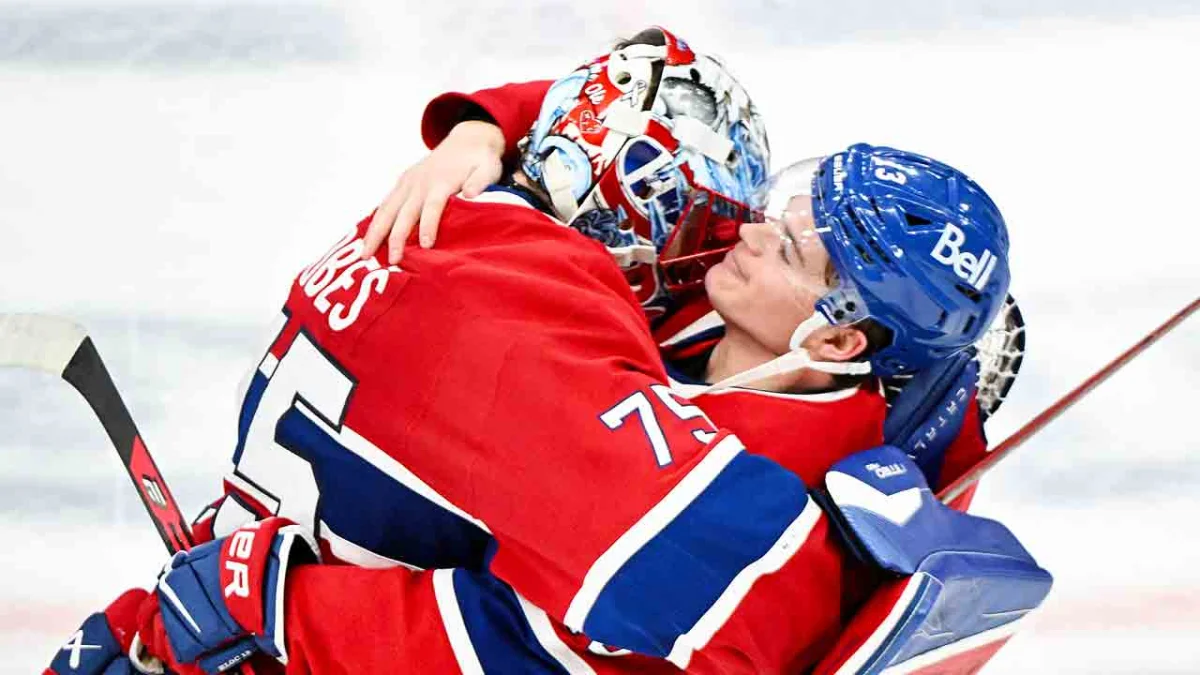
Montreal’s response mattered as much as the result. Two nights after surrendering a four-goal lead in the final 2:39 against Winnipeg and losing 5-4 in overtime, the Canadiens faced another difficult test: a Utah Mammoth team built to attack quickly. Montreal trailed four times, kept finding an answer and won 5-4 when Cole Caufield beat Sebastian Cossa in overtime.
The comeback began early. Logan Cooley scored on Utah’s first shot, then added another on a rush to put the Canadiens in a two-goal hole. Montreal replied twice before the first period ended. The game kept swinging after that: Utah moved ahead 3-2, Montreal tied it; Utah made it 4-3, and Montreal found another equalizer. Adam Engstrom’s first NHL goal proved decisive in regulation, setting the stage for Caufield’s finish.
That sequence gave Montreal a chance to show what had been missing against Winnipeg: composure after a setback. The Canadiens had played poorly in that loss and let a historic comeback slip away. Against Utah, their execution still had flaws, but they stayed engaged through every change in the score. They didn’t let the earlier collapse dictate how they handled the next one.
Contributions across the lineup
Nick Suzuki helped steady the game after missing the Winnipeg loss. The captain recorded a goal and two assists, won 11 of 20 faceoffs and finished plus-2. He played 20:04 across 25 shifts, giving Montreal a reliable presence at the centre of the action. The Canadiens had gone 5-0-0 without him before losing to Winnipeg, but his return brought an important source of direction when the game turned unsettled.
Kirby Dach also made his presence felt after missing two games because of illness. He assisted on Arber Xhekaj’s goal, then scored on the power play to make it 3-3 in the third period. It was Dach’s first goal of the season, and at that point it looked like it might be the night’s most timely contribution. Engstrom’s late equalizer changed that calculation.
Xhekaj’s first goal of the season came with a forceful finish: his shot was the hardest recorded for a goal in the NHL this season. He then fought Liam O’Brien after the next faceoff. Juraj Slafkovsky offered a different kind of response, recovering his two-way game after a difficult outing against Winnipeg. “My feet were moving, I was winning battles, I was protecting the puck well, making plays, and shooting on net,” Slafkovsky said of what changed.
Engstrom had to recover from a difficult opening. The 22-year-old rookie was caught as Cooley sped past him for the first of his three goals. But he stayed with the game and scored his first NHL goal to tie it at four. That answer echoed Montreal’s collective effort: an early mistake didn’t become the story of the night.
Montreal’s response under pressure
Coach Martin St. Louis had expected his team to respond after the Winnipeg loss. He described the Canadiens as hungry and resilient, adding that they could be honest about a setback and repair their game. “We’re not perfect,” he said. “It’s a long season, we’re going to have some ups and downs, but I think we stay on task.” His read was that the group remained engaged regardless of the score.
There was a practical reason that resilience mattered. Utah entered with the league’s fifth-most rush chances and repeatedly threatened off the rush, with Cooley turning those openings into three goals. The Mammoth’s power play had been operating at 36.4 per cent before Thursday, and Montreal gave it too many opportunities. Utah scored three times with the advantage.
Two of those power-play goals came on broken plays involving broken Canadiens sticks. That detail helped explain how Montreal could concede three goals in that situation and still control much of the game at five-on-five. The Canadiens limited the damage, kept their focus and created enough pressure of their own to stay within reach.
Jakub Dobes was part of that effort. Cooley beat him with the game’s first shot, and three more Utah shots found the net, but Dobes made important saves to keep Montreal in contention. Suzuki called the team’s work collectively great. The win needed contributions from the forwards, the rookie defenceman, the goaltender and the captain.
St. Louis suggested that the Winnipeg collapse might have been the jolt his team needed. One win can’t erase the problems exposed in that loss, and Montreal was far from flawless against Utah. But the Canadiens showed they could absorb another early blow, make adjustments and keep pushing for an answer. Caufield’s overtime shot settled the score; the broader takeaway is that Montreal’s response held up when the pressure returned.
Cole Caufield supplied the finish, while Nick Suzuki helped guide the route there. For a team coming off one of the most damaging late-game swings in NHL history, the next test is carrying that steadiness into its next game.