Strictly’s Theme Weeks Are Stealing the Spotlight from Its Best Dancing
From Delta Goodrem’s Ghost-inspired waltz in Addams Family dress to a fourth Ghostbusters routine, Strictly’s themes are starting to overpower the performances.
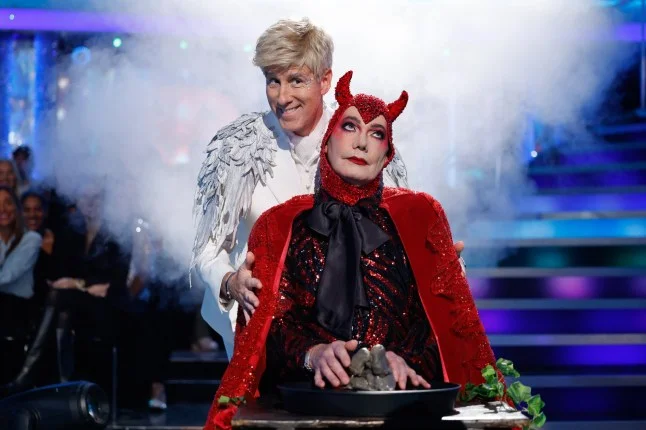
Strictly Come Dancing’s theme weeks are meant to give its routines extra character. This series, they’re increasingly getting in the way of the dancing. Delta Goodrem and Kai Widdrington’s Viennese waltz showed the problem in sharp relief: a standout performance built around an iconic film moment, dressed for an entirely different story.
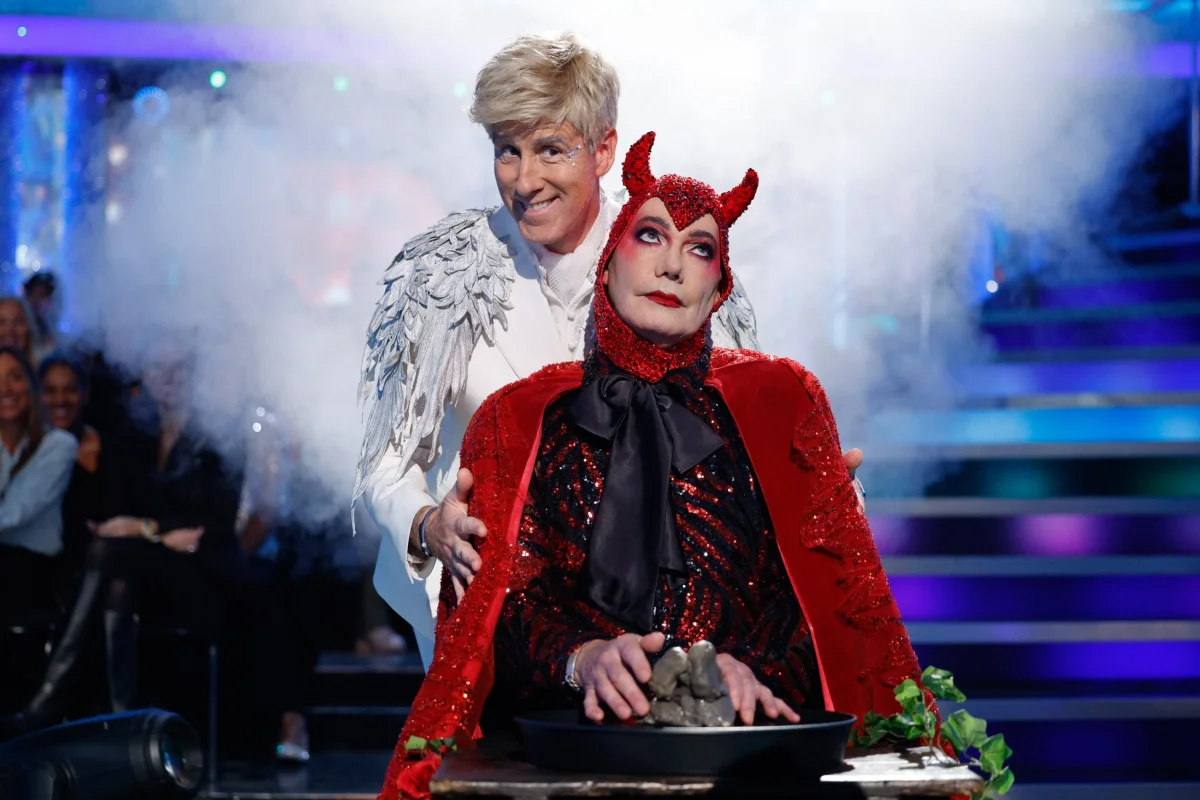
The show still has enough charm to overcome its occasional naff joke. Since Josh Widdicombe, Emma Willis and Johannes Radebe took over presenting from Tess Daly and Claudia Winkleman, the jokes have come thick and fast. The costumes, though, are another matter. This series has already had Movie Week and Icons Week, and Halloween brought another round of elaborate outfits for judges, presenters and dancers.
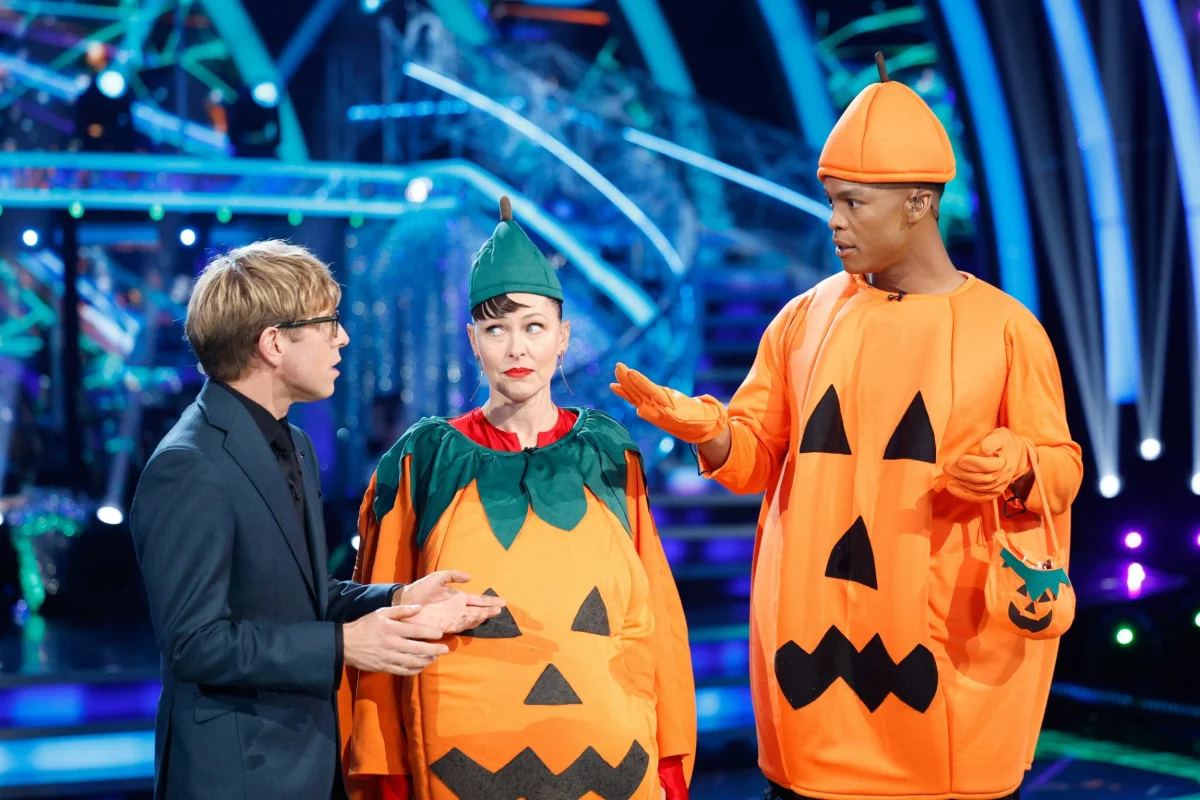
Widdicombe wore a plain green suit for the Halloween show, prompting viewers to criticise him on social media for appearing not to want to be there. That seems a harsh judgment for someone who simply didn’t join in with fancy dress. The hosts shouldn’t have to treat every theme as a costume assignment.
The bigger issue is how the themes shape the dances themselves. Contestants are already learning ballroom routines and performing in front of millions. Adding a character to play can be another demanding skill, and it doesn’t suit everyone equally. Meanwhile, judges such as Craig Revel Horwood have to deliver serious feedback while dressed for the occasion. He may look spectacular, but it’s harder to focus on his critique when a contestant is styled as Liam Gallagher.
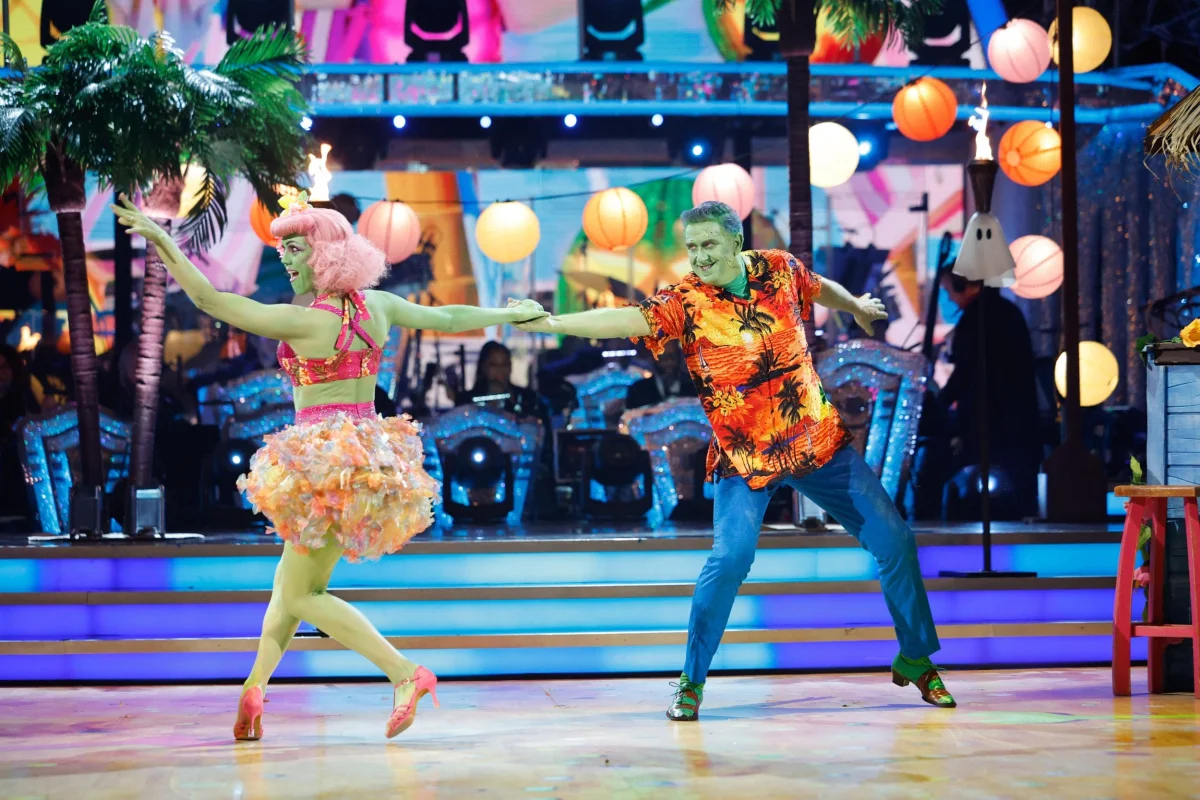
Halloween offered a vivid example of the uneven results. Graeme Hall, known as The Dogfather, came out looking somewhere between Shrek and a zombie for a samba to “Coconut”. The costume, song and dance seemed to pull in separate directions. By contrast, John Nellis and Katya Jones made a striking impression in matching latex for their tango. A theme can give a couple a clear idea to build on, but it can also leave the choreography competing with the dress-up.
Goodrem’s waltz was the clearest missed opportunity. She and Widdrington danced to “Unchained Melody” by The Righteous Brothers, closely associated with the pottery-wheel scene in Ghost. They even opened with the wheel. But Goodrem was dressed as Morticia Addams and Widdrington as Gomez, apparently because Ghost fit Movie Week better than Halloween.
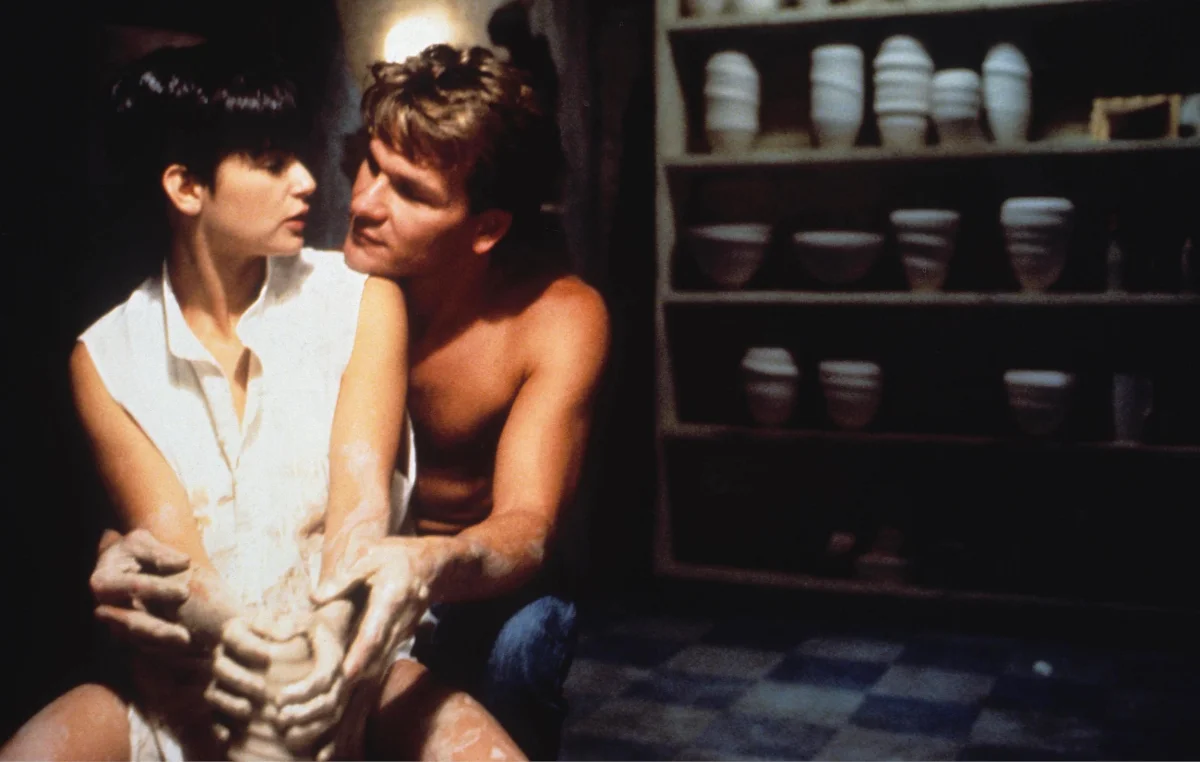
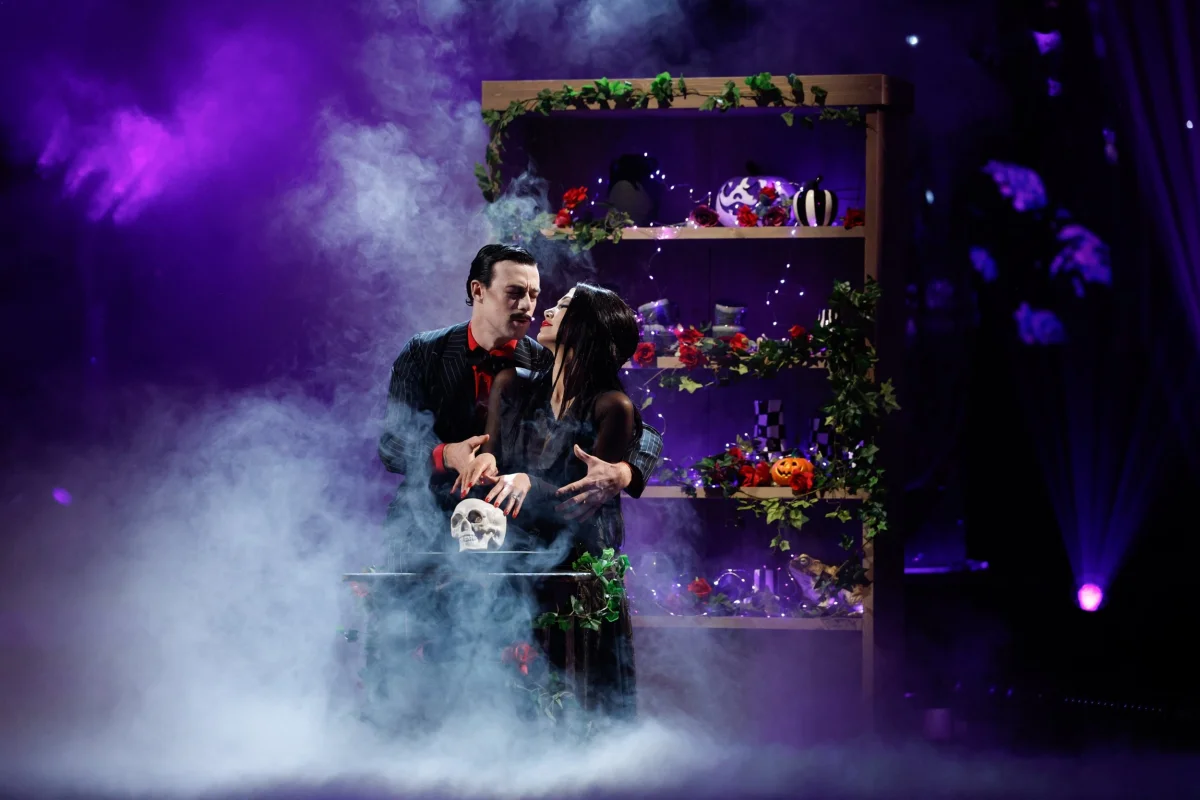
Goodrem makes the routines look effortless, and her connection with Widdrington appears among the strongest of the series. After much of her career at the piano, seeing her dance at this level has been a revelation. A short black wig and white shirt dress for Goodrem, with Widdrington in jeans, could have let the song and their movement carry the scene. Instead, the Halloween costumes took priority over the story their music already supplied. The result was still one of the night’s finest dances; it could have been even more memorable.
Icons Week showed the same split. Shaun Wright-Phillips seemed perfectly matched with a James Brown medley, drawing on a performer whose style felt natural to him. Dame Sarah Storey, meanwhile, left the competition that week after struggling to capture Shania Twain’s character in the video for “That Don’t Impress Me Much”. The contrast suggests that theme casting can either unlock a contestant or put them in a role that distracts from their strengths.
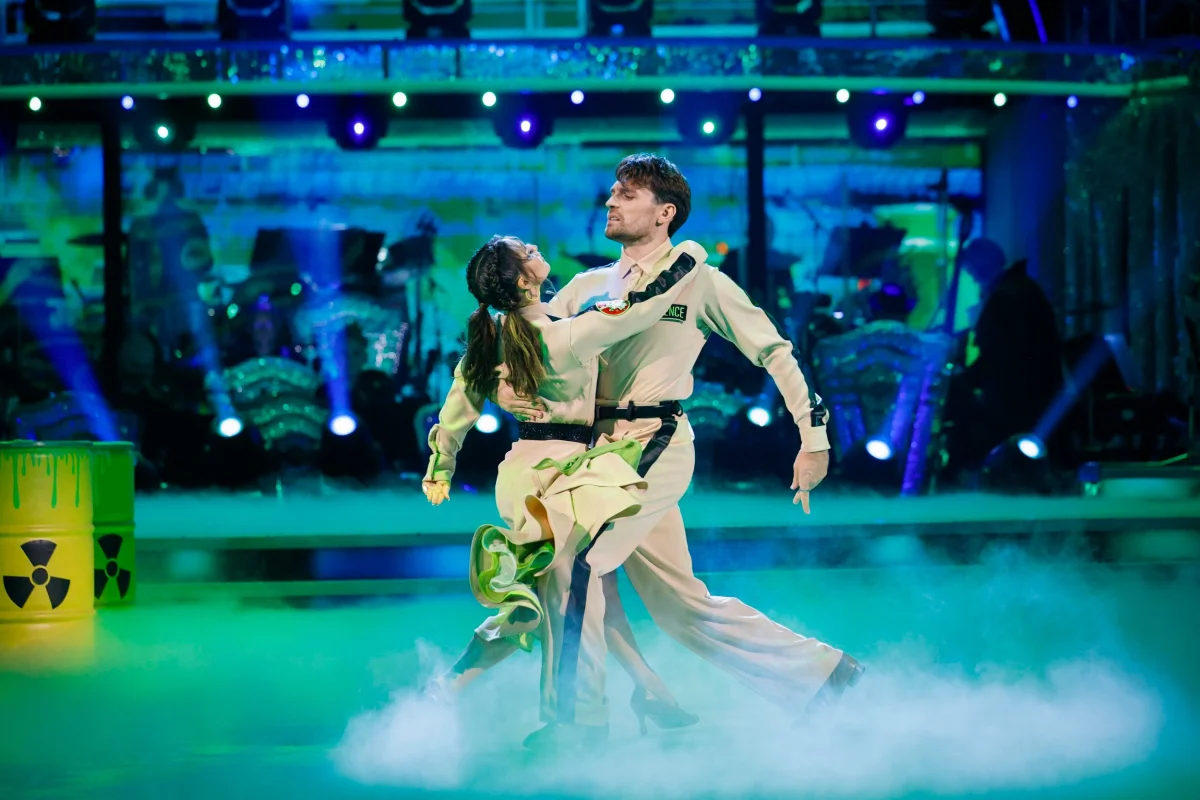
Repetition compounds the problem. The Halloween show ran for two hours with 11 couples still to dance, and the format can begin to drag when each routine has to serve the same theme. Lawrence Robb and Jowita Przystał’s tango to “Ghostbusters” marked the song’s fourth appearance on Strictly. It’s a playful choice, but familiarity limits how much surprise another version can deliver.
There’s a case for acknowledging Halloween on a Saturday night; many viewers will be celebrating, whether dressed as a vampire or something more unexpected. But a themed show shouldn’t require every dance to bend around a costume or a dwindling pool of obvious songs. Strictly’s best moments come when the dancers, music and choreography hold attention together. With three couples due in the dance-off, Goodrem looks well placed to reach at least the semi-final. The sharper question for the show is whether it can let the dancing lead before another theme turns a promising routine into a missed chance.