Elena Rybakina Beats Leylah Fernandez in Ningbo to Claim Tour-Leading Fourth Title
Rybakina’s 6-2, 6-2 win over Fernandez made her the first four-time WTA Tour champion this year and extended her Ningbo streak to eight matches.
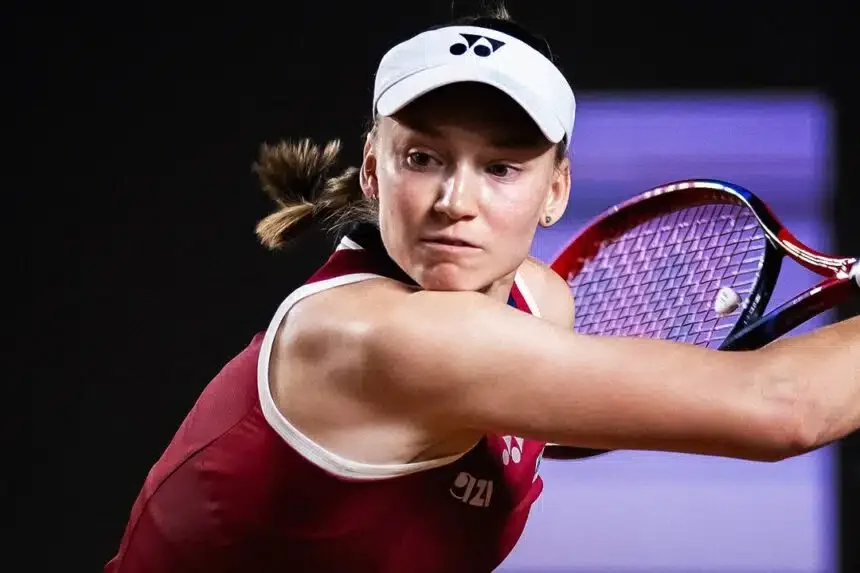
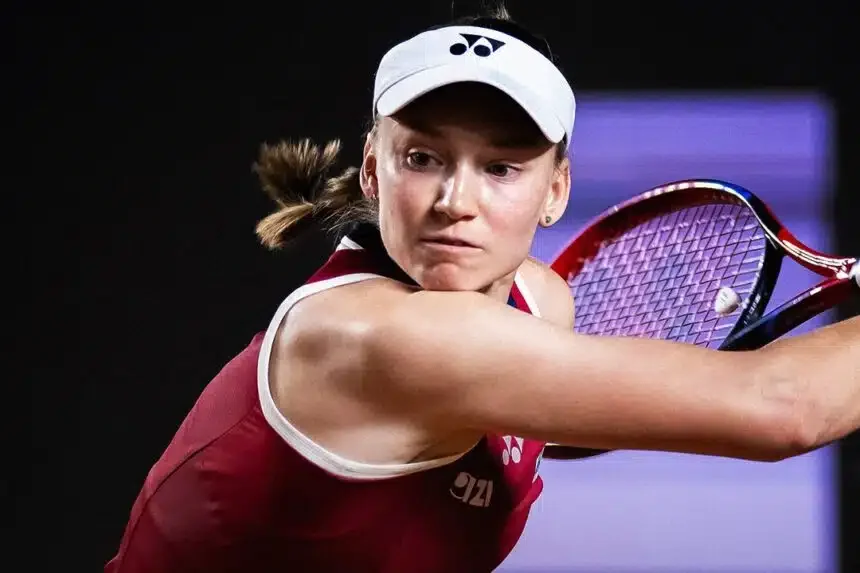
Elena Rybakina made the Ningbo Open final look one-sided, then left with a milestone that sets her apart from the rest of the WTA Tour this season. Her 6-2, 6-2 win over Leylah Fernandez made her the first player to collect four Tour titles this year, and she did it without facing a break point. That combination says more than the score alone: Rybakina won the exchanges that mattered and kept Fernandez from creating a single service-game emergency.
The world No. 1 needed just under 80 minutes to close out the match. She won four of the five break points she earned, struck 25 winners and gave Fernandez no opening to turn the final into a contest of momentum. The scoreline captures the gap on the day; the unbroken service record underlines how little room Rybakina allowed her opponent to build pressure. This is more significant than it looks: against a finalist in strong form, she kept the match from becoming a test of nerve late in either set.
A final decided by control
Rybakina’s return game supplied the clearest route to the title. Converting four break chances in a two-set match meant she repeatedly turned opportunities into scoreboard separation, while holding every service game kept Fernandez from answering with a break of her own. That balance left the finalist needing to chase the match without a service breakthrough to steady things. For a player trying to reverse the pattern, even one hold can change the feel of a set; Fernandez never found that foothold.
Fernandez arrived with strong form and a recent title from the Asian swing, but Rybakina’s level in the final made that run difficult to extend. The Canadian had won 13 of her previous 17 matches, a stretch that included her Singapore Open triumph last month. In Ningbo, she reached the final but couldn’t find a way through Rybakina’s serve or blunt the pressure on her own service games. Her run still matters: it showed she had built enough consistency to reach the final, even if the last match exposed how little margin there was against Rybakina at this level.
For Rybakina, the result also marked a first: she has now successfully defended a Tour-level title. Her eight-match winning streak at the event shows how well Ningbo has suited her over two appearances. She described the tournament as a special place, saying this was her second year there and her second win. A successful defence is a different kind of test from winning once; the player returns with expectations and has to deliver across another week. Rybakina did that without letting the final become complicated.
A title run with one difficult set
The final capped a week in which Rybakina dropped only one set. That came in the quarter-finals against Poland’s Katarzyna Kawa. She opened her campaign against Polina Kudmertova, who retired, then beat Diana Shnaider in the semi-finals before facing Fernandez for the trophy. The retirement shortened the opening match, so the quarter-final was the clearest challenge on her route to the final. She absorbed that test and finished the week with authority.
That route gave the closing performance added weight: after a demanding quarter-final, Rybakina finished the tournament with two decisive wins. Her 7-2 record in Tour finals played since the start of 2025 adds another measure of her reliability when a title is within reach. Ningbo was her fourth championship of the season, alongside the Australian Open, US Open and Stuttgart Open. Those titles span different stages of the calendar, and the common thread is her ability to turn a good week into a trophy rather than leave the result to a close finish.
At the trophy ceremony, Rybakina praised Fernandez for a strong week and wished her well for the rest of the year. She also thanked her team, including Stas, who stayed with her through the tournament, as well as her family, friends, sponsors and the Ningbo crowd. She said the atmosphere gave her motivation and energy throughout the week. The acknowledgments were gracious, but the match itself was blunt: Fernandez’s progress through the draw didn’t translate into a sustained challenge in the final.
Tokyo comes next
Fernandez took a constructive view of her finish, saying, “We’re having a good end of year. We just gotta keep going, keep working hard.” The final denied her a second title during the Asian swing, but her recent results leave her with a winning record across her last 17 matches and another deep run to carry into the next event. There’s a useful distinction here: a final loss can sting, but it doesn’t erase the form that got her there. Her task is to carry that level into Tokyo and find ways to make the biggest matches more competitive.
Both players are scheduled to return next week at the Toray Pan Pacific Open in Tokyo, the final WTA 500 event of the season. Rybakina arrives with a fourth title and a fresh stretch of confidence; Fernandez will look to convert her current form into another chance at a trophy. If you’re tracking the end-of-season picture, their different questions are clear: can Rybakina sustain this control against another field, and can Fernandez turn a strong run into a title? Ningbo alone can’t settle either point. It does, however, offer a clear benchmark for the level Rybakina can bring when her serve and return are both working.
What Ningbo means for the next test
Rybakina’s four titles make her the season’s first player to reach that mark, but the next event will test whether Ningbo was part of a broader run of command or a particularly clean week. Winning without facing a break point is a striking standard; it’s also difficult to treat as a guarantee. Similar performances depend on both the champion’s execution and the opponent’s inability to apply pressure, and those conditions change from match to match.
That said, the title defence and her record in finals point to a player who has handled the decisive moments well. For Fernandez, the lesson is less dramatic but still useful: the Asian swing has produced a title and a final, evidence of form she can take into Tokyo. The gap in Ningbo was plain. Whether it persists will depend on what each player can reproduce in the next demanding match, not on the final’s scoreline alone. And that’s the part most people overlook: a dominant final tells us exactly what happened that day, while the next tournament tests what can last.
A clear statement. Then another test.